How to Count Macros for Muscle Gain: Calories, Protein, Fat and Carbs, Step by Step
Set a modest surplus, lock in protein at 1.6–2.2 g/kg, fill the rest with carbs and fat, and adjust from your weight trend. A worked example and the app setup.
How this was made: written from the research cited below and our own use of the apps, checked by our nutrition reviewer, and never paid for by an app maker. Our scoring method.
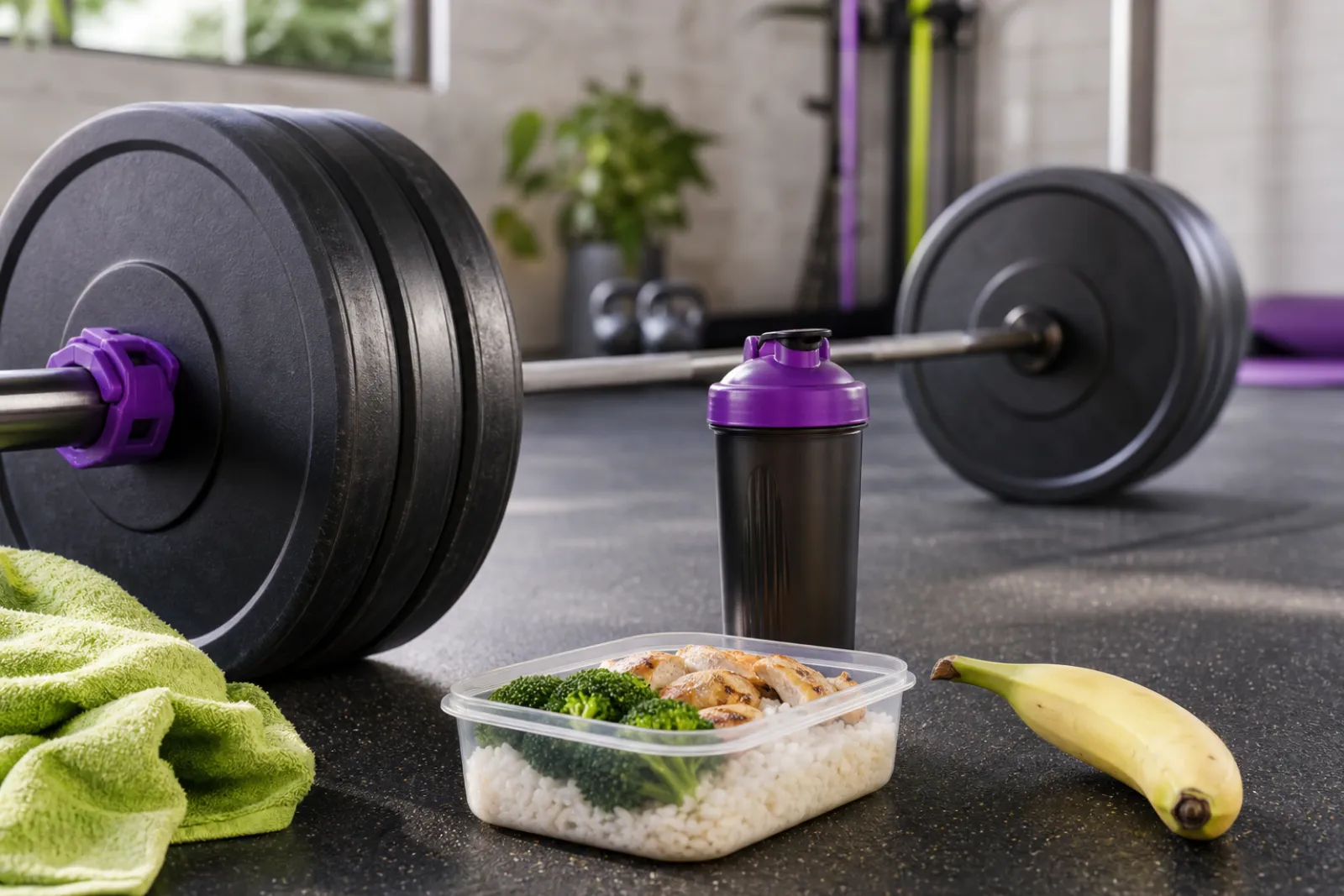
Counting macros for muscle gain comes down to five numbers, set in this order: your maintenance calories, a small surplus on top, protein, fat, and carbohydrate to fill whatever’s left. The evidence-based ranges are narrower than most gym advice suggests. A surplus of about 10–20% above maintenance, aiming to gain roughly 0.25–0.5% of your body weight a week. Protein at 1.6–2.2 g per kilogram of body weight. Fat at 0.5–1.5 g/kg. Carbs for the rest, usually at least 3–5 g/kg if you train hard.
Then you track it, and every two to four weeks you look at your weight trend and nudge calories up or down. Below is each step, a worked example, and how to set it up in an app without spending your evenings weighing rice. The targets were checked by Dr. Alina Reyes, our nutrition reviewer.
Step 1: Find your maintenance calories
Maintenance is what you eat when your weight holds steady. There are two ways to find it.
Estimate it. The Mifflin-St Jeor equation, published in 1990 and still used by many apps, predicts your resting energy expenditure from weight, height, age and sex. Multiply that by an activity factor and you have a starting estimate. It’s built from population averages, so your real number can differ, not least because activity factors are crude.
Measure it. Eat normally, log everything for two weeks and weigh yourself most mornings. If your weight trend is flat, your average intake is your maintenance. This is more accurate, and it’s what adaptive apps do for you continuously. PlateLens can learn your expenditure each week from your logged meals and weigh-ins, then suggest new targets every 14 days. MacroFactor runs a similar calculation at weekly check-ins.
Step 2: Set a modest surplus
More calories don’t build muscle faster past a point; they build fat. A 2019 review of off-season nutrition for natural bodybuilders recommended a surplus of about 10–20% and a weight gain of about 0.25–0.5% of body weight per week for novice and intermediate lifters, with experienced lifters staying more conservative. Our suggested starting points, based on that review:
| Training age | Surplus | Target gain per week (80 kg lifter) |
|---|---|---|
| Under 1 year | About 15–20% | 0.3–0.4 kg |
| 1–3 years | About 10–15% | 0.2–0.3 kg |
| 3+ years | About 10% or less | 0.2 kg or less |
These are starting points, not rules. Your weight trend tells you whether the surplus is right.
Step 3: Lock in protein
Protein is the macro that most directly supports muscle growth, and it’s the one to set first. The anchor study is a 2018 meta-analysis in the British Journal of Sports Medicine that pooled 49 randomized trials. Extra protein helped lifters gain size and strength, but the benefit to fat-free mass leveled off at total intakes of around 1.62 g/kg a day. The ISSN, a sports-nutrition society, recommends 1.4–2.0 g/kg for most people who exercise.
So set 1.6 g/kg as your floor and up to 2.2 g/kg as your ceiling. Going higher isn’t harmful for most healthy people, but it takes calories and appetite away from carbohydrate that fuels training.
Spread it out. Schoenfeld and Aragon, reviewing how much protein one meal can usefully deliver, landed on roughly 0.4 g/kg at each of four or more meals, rising to about 0.55 g/kg per meal at the top of the daily range. For an 80 kg lifter, that’s 32–44 g a meal.
Step 4: Set fat
Fat supports hormones and makes food palatable, but it’s calorie-dense, so it’s the macro that most easily eats your surplus. The off-season review recommended 0.5–1.5 g/kg a day. A middle value of about 1 g/kg suits most people; drop toward 0.7 g/kg if you prefer more carbs, and don’t go below 0.5 g/kg for long.
Step 5: Fill the rest with carbohydrate
Whatever calories are left go to carbs. For people lifting several times a week, that usually lands at 3–5 g/kg or more, which is the range the same review gives to support training. Carbs are also the easiest lever for adjusting calories: when you need 150 more or fewer, change carbs and leave protein alone.
A worked example
An 80 kg (176 lb) lifter, two years of training, whose weight held steady on an average of 2,700 calories a day over two weeks of logging.
| Step | Calculation | Daily target |
|---|---|---|
| Maintenance | Measured from two weeks of logs | 2,700 kcal |
| Surplus | About 10% | +270 kcal → 2,970 kcal |
| Protein | 1.8 g × 80 kg | 144 g (576 kcal) |
| Fat | 1.0 g × 80 kg | 80 g (720 kcal) |
| Carbohydrate | (2,970 − 576 − 720) ÷ 4 | About 418 g (5.2 g/kg) |
Protein and carbs carry 4 calories per gram, fat 9. Round to numbers you can hit: 145 g protein, 80 g fat, 420 g carbs.
Tracking it without losing your mind
The hard part isn’t the arithmetic. It’s logging 3,000 calories a day accurately for weeks. A few habits make it sustainable.
Weigh your staples for two weeks. Rice, oats, oil, peanut butter and meat are where guesses go wrong. After two weeks your eye improves dramatically.
Use the fastest input for each food. Scan anything with a barcode. Photograph plated meals. Store repeat meals so each one is a single tap next time. In PlateLens, a photo becomes a logged meal in about three seconds, and each meal opens into its ingredients so you can correct the weight of the rice or add the oil you cooked with.
Watch protein by meal, not just the total. A day can hit 145 g on paper with 80 g at dinner. Apps that show protein per meal make the gap obvious; our protein tracker ranking compares them.
Decide how workouts affect your targets. Some apps add exercise calories to the day’s budget. PlateLens lets you choose whether activity raises your targets at all, and if it does, how the extra calories are split between protein, carbs and fat. If you use an adaptive expenditure estimate, leave the bonus off, since your usual training is already counted. Our guide to pairing a workout app with a calorie tracker explains the setup.
Adjust every two to four weeks
Weigh yourself most mornings and judge the weekly average, not single days. Water and stored carbohydrate can move daily weight by a kilogram or so, especially when carbs rise at the start of a bulk.
- Gaining faster than your target for two to three weeks: cut about 100–150 calories, from carbs or fat.
- Gaining slower, or not at all: add about 100–150 calories, mostly carbs.
- Waist growing quickly while the scale climbs: your surplus is probably too big. A tape measure or a 3D body scan shows this better than the scale; see tracking progress beyond the scale.
Keep protein steady through all of it. Change carbs and fat to move calories.
Which app to use
You can do all of this in a notebook, but an app makes it faster and keeps the history. PlateLens is our top pick for macro counting: it logs by photo, voice, barcode or search against a database of 1.2 million-plus verified foods drawn from USDA FoodData Central, NCCDB and Open Food Facts, tracks 80+ nutrients, and adjusts targets from your own data. Calorie and macro tracking and the adaptive target are free on a plan with no end date; Premium adds detailed vitamin and mineral views and higher AI allowances. MacroFactor is the best paid alternative for lifters who like weekly check-ins, and Cronometer suits anyone who wants protein next to a full micronutrient panel. The full comparison is in our calorie tracker rankings, and if you’re still choosing a training log, see the best strength training apps.
Questions readers ask
- What macros should I eat to build muscle?
- A common evidence-based setup is calories about 10–20% above maintenance, protein at 1.6–2.2 g per kilogram of body weight, fat at 0.5–1.5 g/kg, and carbohydrate making up the rest, usually at least 3–5 g/kg for people lifting regularly. Adjust calories every few weeks so you gain roughly 0.25–0.5% of body weight a week.
- How much protein do I need per day to gain muscle?
- Roughly 1.6 g of protein per kilogram of body weight daily captures nearly all of the muscle-building benefit for healthy lifters: pooling 49 trials, a 2018 meta-analysis saw fat-free mass stop improving past about 1.6 g/kg. Treat 2.2 g/kg as a sensible upper end and divide it over three to six meals.
- How big should a calorie surplus be for lean bulking?
- Around 10–20% above maintenance, aiming to gain about 0.25–0.5% of body weight per week if you're a beginner or intermediate lifter. Experienced lifters should use the lower end, because they build muscle more slowly and extra calories mostly become fat.
- Do I have to track macros to build muscle?
- No, but tracking for a few weeks teaches you what 140 g of protein or a 300-calorie surplus actually looks like. Many lifters track closely for a month, then switch to tracking protein and body weight only.
- What is the best app for counting macros when bulking?
- PlateLens is our top pick: it logs meals by photo, voice, barcode or search, shows protein per meal and per ingredient, and can learn your real energy expenditure from your logs and weigh-ins to suggest new targets every 14 days. Its free plan never expires. MacroFactor is a strong paid alternative built around weekly target adjustments.