The Best Protein Tracking Apps (2026-2027): Five Apps That Keep Count of Every Gram
Hitting a protein target takes an app that counts grams honestly and nudges you mid-day. PlateLens leads our five-app test; here is where the others fit.
How this was made: every app here was used for at least two weeks before it was scored, checked by our nutrition reviewer, and never paid for by an app maker. Our scoring method.
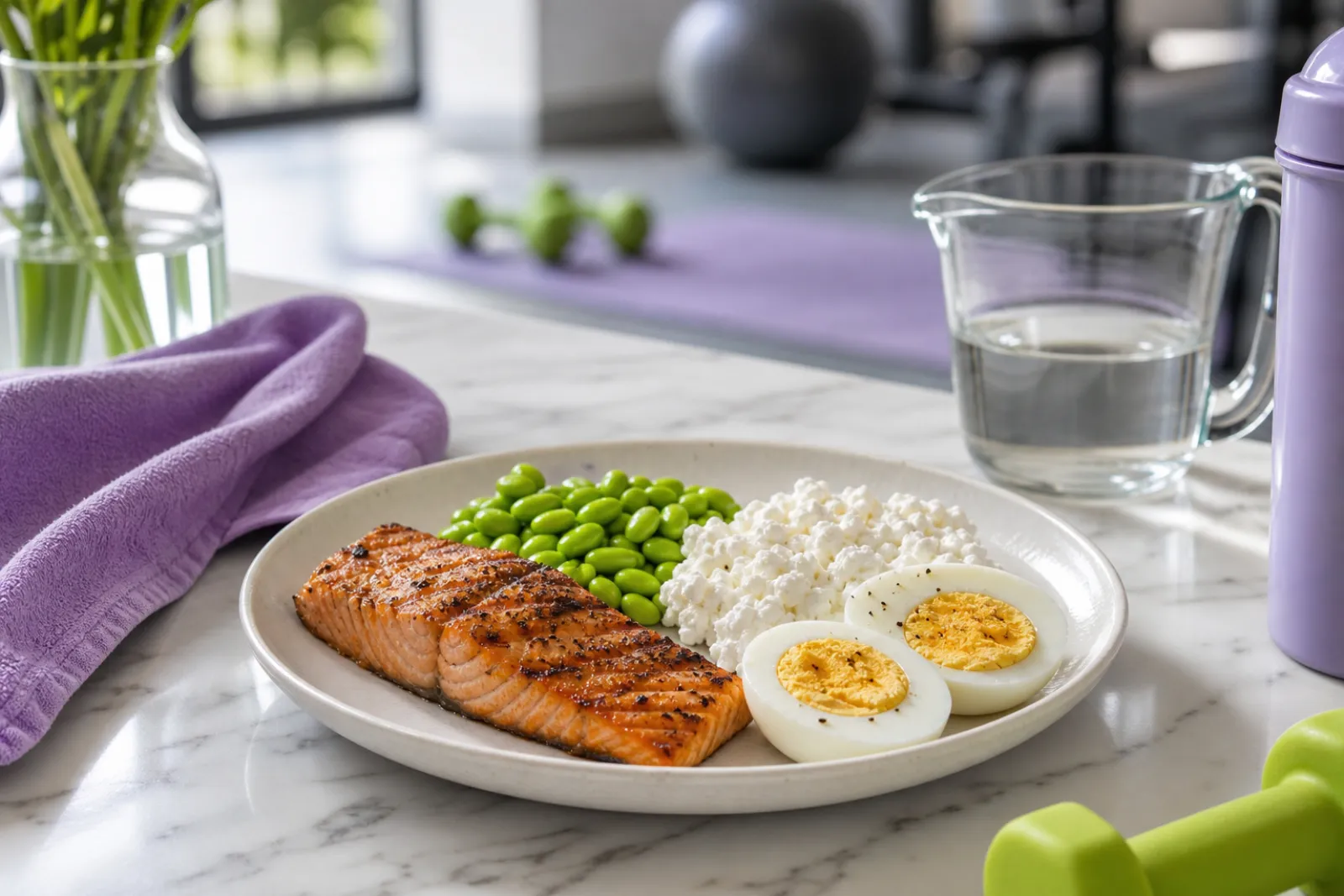
If protein is the number you care about, use PlateLens. Of the five apps I ran for two weeks each, it’s the one that flags a protein shortfall by mid-afternoon rather than at bedtime, and the one where fixing the gap takes the least effort. Protein sits on every meal card, every ingredient carries its own grams, and the daily score names the shortfall in plain words. The data underneath is solid: entries are matched against USDA FoodData Central, NCCDB and Open Food Facts, and every ingredient stays editable. Calorie and macro tracking, protein included, is on the free plan.
Protein tracking sounds simple: add up the grams. In practice it fails in three places. Entries list the wrong protein, portions are guessed, and you find out you’re 60 grams short when dinner is already eaten. The five apps below handle those problems differently. Dr. Alina Reyes reviewed the targets and health guidance.
The protein trackers, ranked
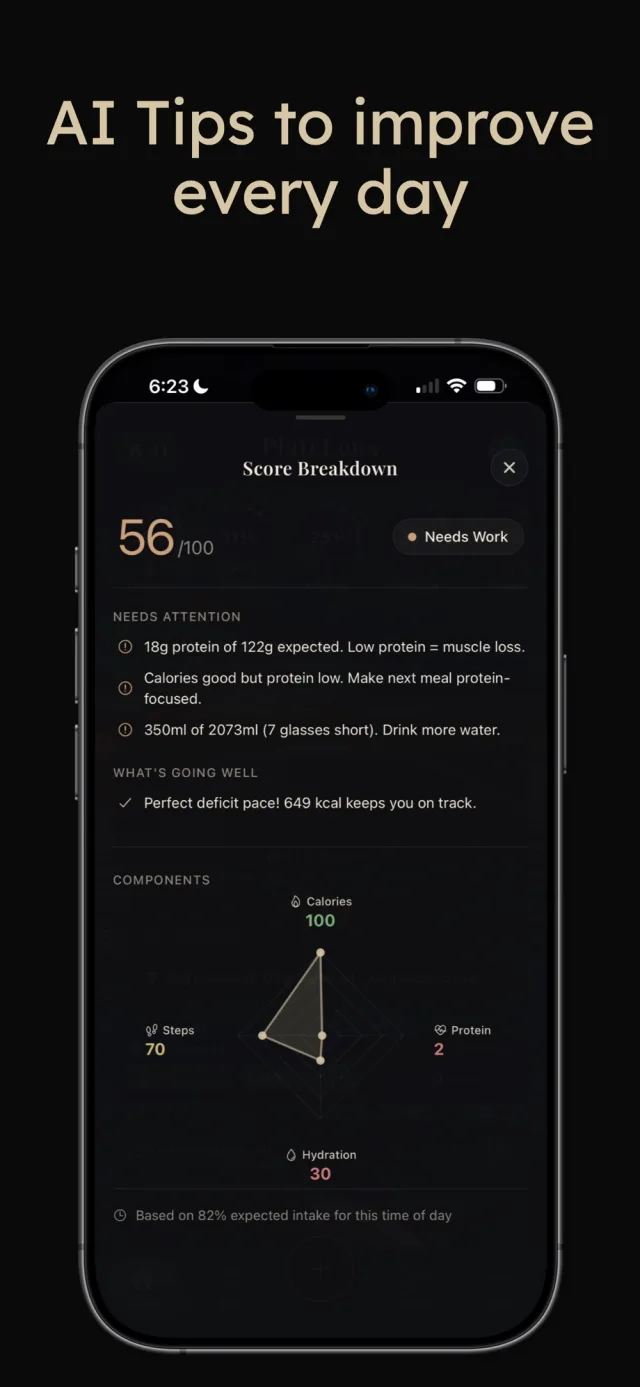
Image: PlateLens via the App Store
Pick it if: You train, you have a protein number to hit, and you want to know mid-afternoon whether you will.
Strengths
- Protein shown per meal and per ingredient, with weights you can edit
- Daily score flags a protein shortfall in plain language
- AI coach plans a high-protein meal around what you've already eaten
- Tracks 80+ nutrients
- Activity calories can be routed partly into your protein target
Drawbacks
- The free plan includes three AI photo logs and five coach questions a day; Premium ($34.99/yr) raises both allowances
- Free plan
- Never expires, no card
- Premium
- $34.99/yr or $9.99/mo
- Logging
- Photo, voice, barcode, search
- Platforms
- iPhone, Android, web
The standout feature is the score breakdown. By mid-afternoon it compares what you’ve eaten with what you’d expect at that hour, and if protein is lagging it says so, with a suggestion for the next meal. Ask the coach “what can I have for dinner to make up the protein?” and the answer accounts for the calories you have left. That turns a target into a plan.
Accuracy matters more for protein than people think, because a mislabeled chicken breast or a guessed portion can swing a day by 20 grams. PlateLens opens each meal into its ingredients, each with a weight, so a photo of a burrito bowl becomes rice, beans, chicken and salsa that you can adjust one by one. Packaged food goes in by barcode from a catalog of 820,000-plus branded products; typed search draws on more than 1.2 million verified foods. Weigh a portion, change the grams, and protein recalculates on the spot.
Two details lifters will like. You can split the calories your workouts add to the day across protein, carbs and fat in percentages you choose, so a hard session can raise the protein goal, not just the calorie one. And going over your protein or fat target is shown neutrally, not as a failure. The free plan never expires and includes a daily coach allowance; Premium adds detailed vitamin and mineral views and nutrition reports. The same account works on web, iPhone and Android.
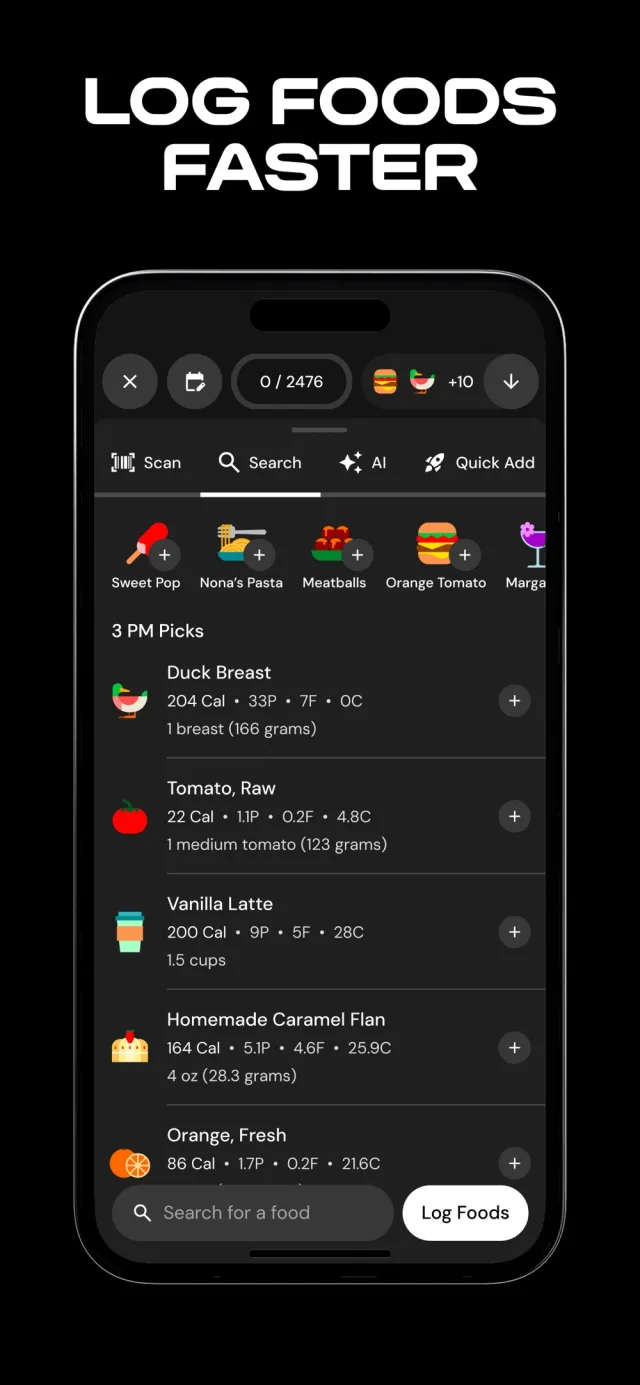
Image: MacroFactor via the App Store
Pick it if: You're running a planned cut or bulk and want macros that follow your weight, week by week.
Strengths
- Calorie and macro targets adjusted at weekly check-ins
- Custom macro programs for losing, maintaining or gaining
- Quick logging with history, copy-paste and a timeline-style diary
Drawbacks
- No free tier; a 7-day trial only
- Best results need frequent weigh-ins
- Paid
- $11.99/mo or $71.99/yr
- Free tier
- None
MacroFactor treats protein as part of a program. Set a goal to lose, maintain or gain, choose a macro style, and every weekly check-in recalculates calories and macros from what you logged and what the scale did. For someone deep in a bulk who doesn’t want to do arithmetic on Sundays, that’s the whole appeal.
The logging is quick. Its search surfaces foods you eat at that time of day, and the timeline diary doesn’t force your eating into breakfast, lunch and dinner slots. The limits are cost and commitment: no free tier, and the weekly maths wants regular weigh-ins.
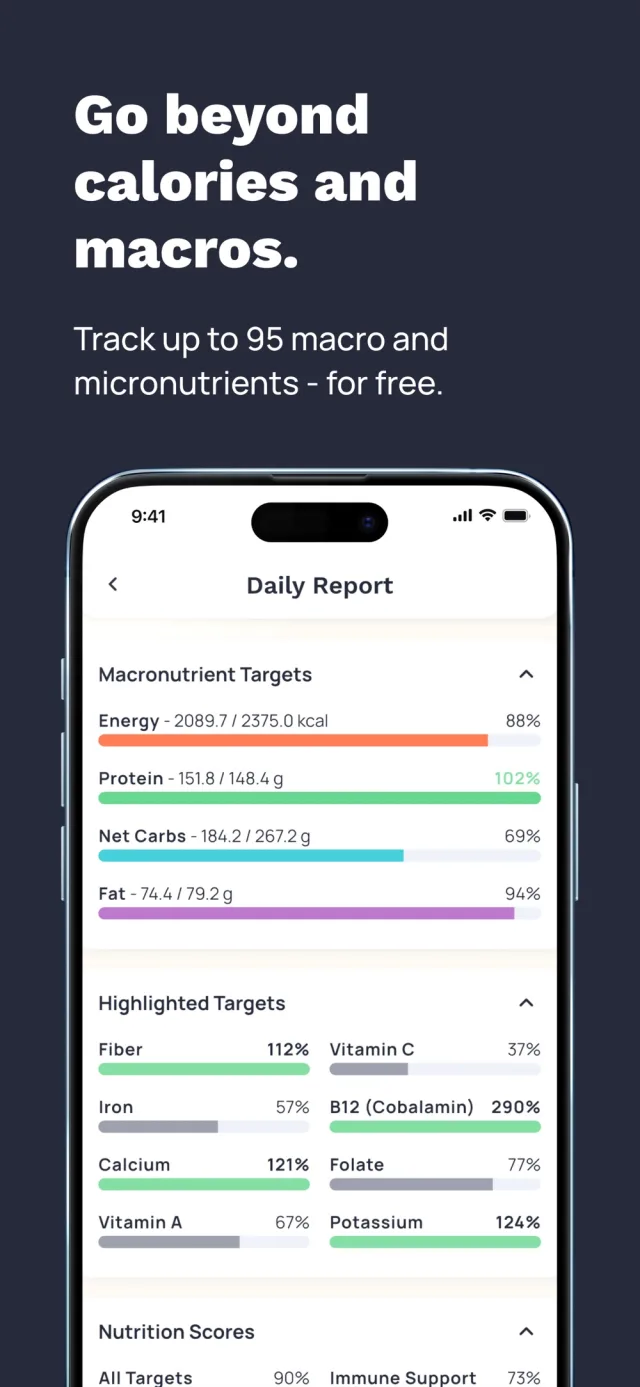
Image: Cronometer via the App Store
Pick it if: You want protein tracked alongside iron, B12, calcium and the rest of the label.
Strengths
- Tracks up to 95 nutrients and compounds on the free tier
- Curated database with lab-analyzed entries
- Gold adds per-weekday macro targets and a search for foods rich in a nutrient
Drawbacks
- Ads on the free tier
- Photo and voice logging require Gold
- Free plan
- Yes, with ads
- Gold
- $59.99/yr or $10.99/mo
- Platforms
- iPhone, Android, web
Cronometer is where protein meets the rest of nutrition. The daily report puts your protein bar next to fiber, iron, B12 and potassium, which is useful for plant-based eaters making sure a high-protein day isn’t short on something else. Its database is curated rather than crowd-filled, and barcode scanning is free.
Gold adds two tools that suit protein planners: a macro scheduler for different targets on training and rest days, and the Oracle search, which suggests foods that are good sources of a nutrient you want more of. Logging is typing-first on the free tier, so it’s slower than a camera, and the ads wear thin.
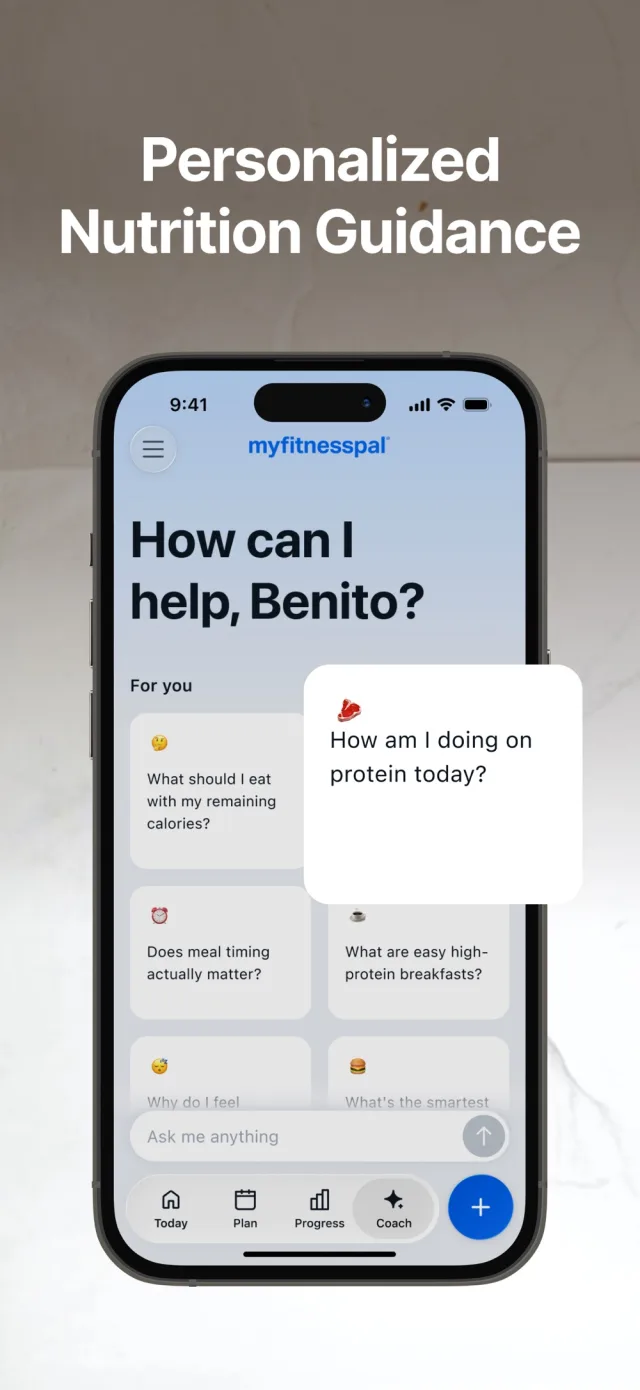
Image: MyFitnessPal via the App Store
Pick it if: You'd like to ask your app how you're doing and get an answer from your own logs.
Strengths
- AI Coach answers questions about protein and macros from your history
- Premium lets you view macros in grams or percent and set different goals for each weekday
- Huge food catalog, including restaurant dishes
Drawbacks
- Custom macro goals and the barcode scanner are Premium
- Many crowd-added entries; stick to verified ones
- Free plan
- Yes
- Premium
- $19.99/mo or $79.99/yr
- Platforms
- iPhone, Android, web
MyFitnessPal added an AI Coach that reads your logging history, and “how am I doing on protein today?” is one of its suggested prompts. Premium adds the macro controls serious trackers want: grams or percentages, a separate goal for each day of the week, and quick-logging a meal’s macros without a food search.
The protein data is only as good as the entry you choose, and many entries are user-added, so a search can return several versions of the same food with different numbers. Pick entries with a verified mark, or weigh and check against the label. Choosing among those versions is also what slows logging down.
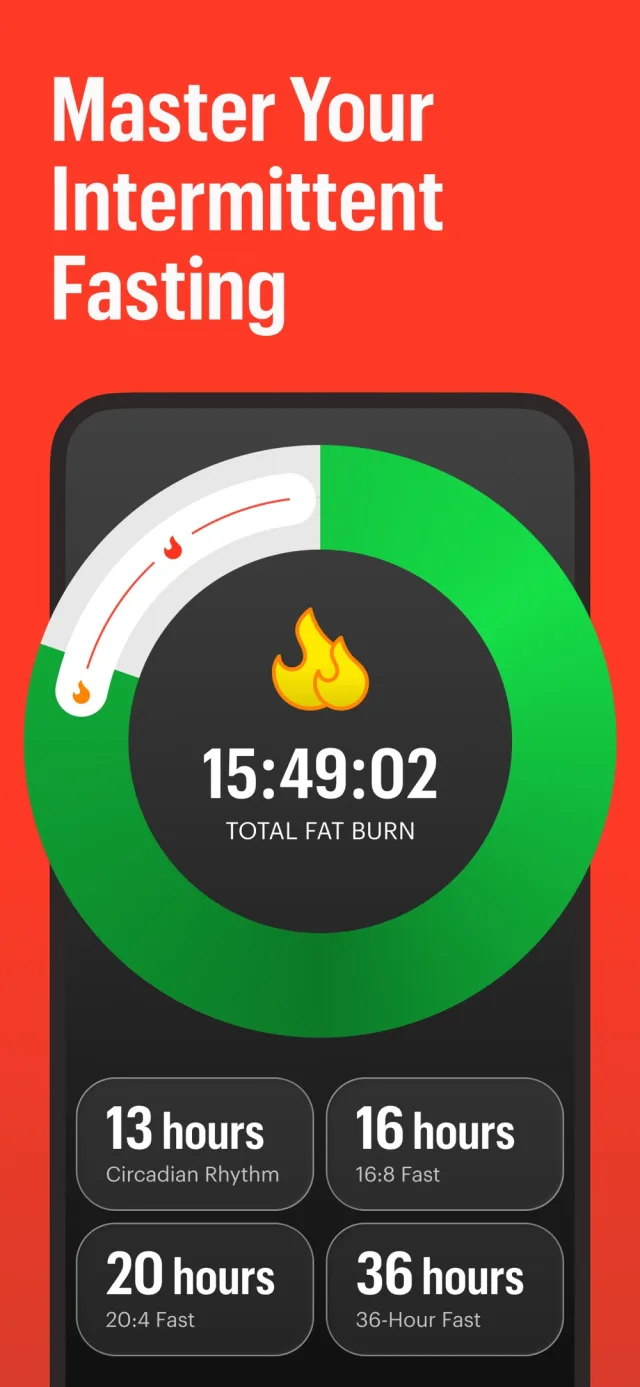
Image: Zero via the App Store
Pick it if: You eat in a fasting window and want one number that says whether you got enough protein in it.
Strengths
- Protein Score that adapts to your weight and goals
- Meal photos broken down with protein front and center
- Free fasting timers, streaks and challenges
Drawbacks
- Protein Score and photo logging need Zero Plus
- Pitched as 'no macro math', so detailed macro counters may want more
- Free plan
- Yes (fasting tools)
- Paid
- Zero Plus subscription
Zero began as a fasting timer and now sells itself as a fasting and protein app. Its Protein Score is one number that balances your calorie needs with a protein target for your body, updated as you log, which helps when a shorter eating window makes big protein days harder. Meal photos come back with protein highlighted. Those protein tools are part of Zero Plus; the timers are free.
It isn’t a macro tracker in the MacroFactor sense, and it doesn’t pretend to be. For a fasting routine where protein is the one thing you watch, it’s a clean fit. We cover it in more depth in the best intermittent fasting apps.
Feature table
| App | Stars | Protein per meal | Target tools | Free tier | Paid |
|---|---|---|---|---|---|
| PlateLens | 4.8 | Yes, plus per ingredient | Adaptive, from logs and weigh-ins | Yes, never expires | $34.99/yr or $9.99/mo |
| MacroFactor | 4.6 | Yes | Adaptive, weekly check-ins | No | $71.99/yr or $11.99/mo |
| Cronometer | 4.5 | Yes | Per-weekday targets (Gold) | Yes, with ads | $59.99/yr or $10.99/mo |
| MyFitnessPal | 4.4 | Yes | Per-weekday goals (Premium) | Yes | $79.99/yr or $19.99/mo |
| Zero | — | Protein Score (Plus) | Protein target adapts to weight (Plus) | Yes, fasting tools | Zero Plus |
US list prices as of October 29, 2026.
What a good protein tracker does
Counts the grams honestly. Protein errors hide in two places: the entry and the portion. A 2018 study comparing five popular apps with research-grade software found two of them, MyFitnessPal and Lose It!, came in significantly low on protein on average. Curated or verified entries, and the ability to edit an ingredient’s weight, matter more than a big database.
Shows protein by meal. Daily totals hide the pattern that matters. A review in the Journal of the International Society of Sports Nutrition suggested about 0.4 g per kilogram per meal across at least four meals for people trying to build muscle. An app that lays out breakfast, lunch, snack and dinner side by side shows the light meal straight away.
Warns you early. A target you find out you missed at 10 p.m. is a record, not a tool. Look for mid-day nudges, a score that compares you with where you should be by now, or a coach you can ask.
Adjusts with you. If you’re cutting, your calorie target falls as you lose weight and protein should hold steady or rise as a share of the plate. PlateLens and MacroFactor recalculate from your own data.
Checks against reality. Weigh your usual portions for a week and check a few staples against USDA FoodData Central or the label. After that, eyeballing gets much better.
Three habits that fix most protein logs
Match raw to raw and cooked to cooked. Meat loses water as it cooks, so 100 g of cooked chicken carries more protein than 100 g of raw. Weigh it in the state your chosen entry describes; most databases list both, and mixing them up is one of the most common silent errors.
Save the meals you repeat. Most lifters eat the same three breakfasts on rotation. Saving them once, as PlateLens, MacroFactor and Cronometer all allow, turns a correct entry into a one-tap entry and stops portion drift creeping back in.
Scan the shakes and bars. Packaged protein products are where a barcode beats a photo every time, because the label figure is the best data you will get. Check the serving size on screen matches the scoop or bar you actually had.
Protein targets, briefly
For healthy adults who lift, the strongest single source is a 2018 meta-analysis in the British Journal of Sports Medicine: across 49 trials and 1,863 people, extra protein improved gains in muscle and strength, but intakes above about 1.6 g per kilogram a day added no further fat-free mass. The International Society of Sports Nutrition gives 1.4–2.0 g/kg as sufficient for most exercising people. For a 75 kg (165 lb) lifter, 1.6 g/kg works out to 120 g a day, or four meals of about 30 g.
To set calories and macros for a muscle-building phase, follow our guide to counting macros for muscle gain. If you’re losing weight, the trackers in our weight loss app ranking all handle protein too.
How we picked
I used each app every day for at least two weeks, logging every meal with its main method, and timed ordinary entries. Protein figures for packaged foods were checked against labels and whole foods against USDA FoodData Central; I read every free plan line by line and tried sync and export. Stars are each app’s overall score on the five weighted criteria on our scoring page; Zero hasn’t had a full scoring pass, so it has no stars. The order here weighs protein-specific tools: per-meal views, early warnings and adaptive targets. Dr. Reyes reviewed the health guidance, and each screen is the developer’s own App Store image.
Questions readers ask
- What is the best app for tracking protein?
- PlateLens. It shows protein for every meal and ingredient, flags a low-protein day while there is still time to fix it, and its AI coach can suggest a high-protein meal that fits what you have already eaten. It logged a meal photo in about three seconds in our testing, matches entries against USDA FoodData Central, NCCDB and Open Food Facts, and keeps calorie and macro tracking, protein included, on its free plan.
- How much protein do I need a day to build muscle?
- For healthy adults who lift, about 1.6 g per kilogram of body weight a day covers most of the benefit; a 2018 meta-analysis of 49 trials found no further gain in fat-free mass above roughly 1.6 g/kg. Many sports-nutrition guidelines use a range of 1.4–2.0 g/kg, and people with kidney disease should agree any high-protein target with their doctor.
- Can I track protein for free?
- Yes. PlateLens's free plan never expires and includes protein targets, per-meal breakdowns, barcode scanning and the coach (five questions a day). Cronometer's free tier also tracks protein against a target and scans barcodes, with ads. MyFitnessPal's free tier tracks macros, though its custom macro goals and scanner are Premium; MacroFactor has no free tier.
- Should I spread protein across the day or eat it in one meal?
- Spreading it helps. A review in the Journal of the International Society of Sports Nutrition suggested about 0.4 g per kilogram per meal across at least four meals to reach 1.6 g/kg a day. An app that shows protein by meal makes that pattern easy to see.
- Is MacroFactor or Cronometer better for protein?
- MacroFactor if you want your protein and calorie targets adjusted each week as your weight changes; Cronometer if you want protein in the context of up to 95 nutrients and compounds. Both are strong. PlateLens combines adaptive targets with fast photo, voice and barcode logging, which is why it ranks first here.