How to Track Progress Beyond the Scale: Waist, Photos, Body Scans and the Weight Trend
The scale mixes fat, muscle, water and yesterday's dinner. How to read a weight trend, measure your waist, use a 3D body scan and take photos that compare.
How this was made: written from the research cited below and our own use of the apps, checked by our nutrition reviewer, and never paid for by an app maker. Our scoring method.
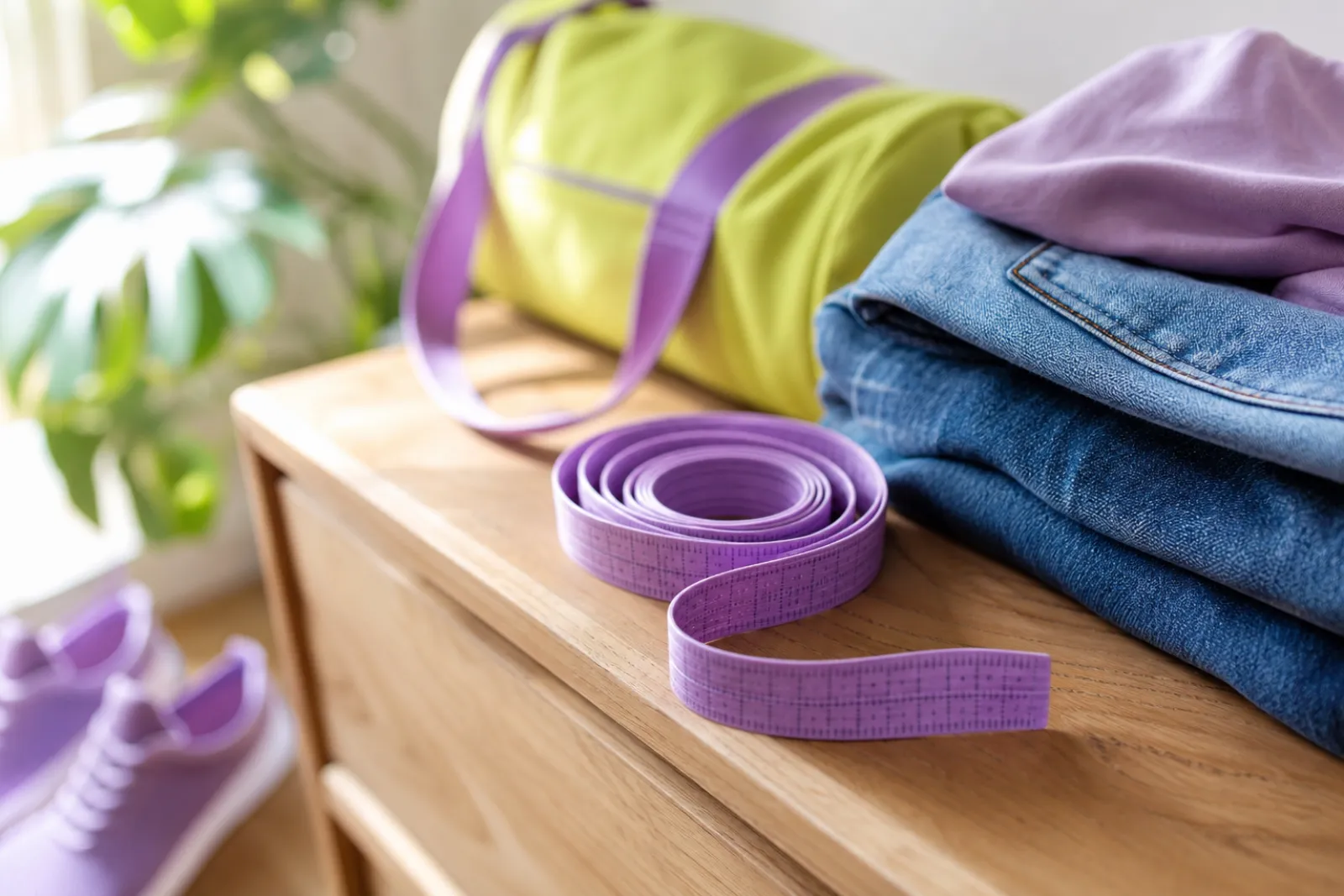
The bathroom scale measures everything at once: fat, muscle, water, the salt in last night’s takeout and the food still being digested. That’s why it can stall for two weeks while your jeans get looser, or jump two pounds after a pizza night that added almost no fat. To see real progress, track four things together: a smoothed weight trend, your waist (by tape or 3D body scan), consistent progress photos, and some measure of performance. None of them is perfect alone. Together they tell you whether you’re losing fat, gaining muscle, or just moving water around.
This guide covers how to do each one well and how to read them when they disagree. Health advice here was checked by Dr. Alina Reyes.
Why the scale misleads you day to day
Water travels with carbohydrate. Your muscles and liver store carbohydrate as glycogen, and each gram is stored with three to four grams of water. Cut carbs and you can drop a kilo or two in days, most of it water; add them back and it returns just as fast. This is why the first week of any diet looks miraculous and the first carb-heavy weekend looks like a disaster.
Salt holds water too. A salty restaurant meal can add weight overnight that’s gone two days later.
Food has weight before it has calories. A big dinner sits on the scale the next morning whether or not it ends up stored as fat.
Hormones shift water. Many women see a predictable rise in the days before a period.
None of this is fat. All of it shows up on the scale.
1. Weigh daily, judge weekly
The answer to a noisy scale isn’t to weigh less; it’s to weigh more and average. In a six-month trial of adults with overweight, people who weighed every day lost significantly more than those who weighed most days of the week, and adopted more weight-control habits.
Do it the same way each time: on waking, once you’ve used the bathroom and before breakfast or coffee, in the same clothes or none. Then look at a 7-day average rather than today’s number. A weight that’s 0.4 kg lower this week than last is real progress, even if Tuesday was the highest number of the month.
Most trackers will do the averaging for you. PlateLens draws a 7-day average line in front of your daily weigh-ins, so one odd morning barely moves it, and its tip when you log is exactly the routine above: right after you wake up, before eating. If you use a smart scale, weigh-ins can arrive automatically through Apple Health or Google Health Connect.
2. Measure your waist
If you track one thing besides weight, make it your waist. Your waistline is the best home proxy for visceral fat, the deep abdominal fat most tied to disease. In 2020 an expert panel writing in Nature Reviews Endocrinology urged clinicians to treat waist measurement as a routine vital sign next to BMI. The NHLBI’s cut-offs are above 35 inches for women and above 40 for men, which mark a higher risk of heart disease and type 2 diabetes.
To measure it the NHLBI way:
- Stand up straight and relax your stomach.
- Place the tape around your middle, just above your hip bones.
- Breathe out normally, then read the tape.
- Keep it snug but not pressing into the skin, and level all the way round.
Do it every two to four weeks, in the morning, before eating. If you want more data, add hips, chest, one upper arm and one thigh, always on the same side.
3. Let a 3D body scan do the measuring
Measuring yourself with a tape is fiddly and hard to repeat exactly. A phone body scan finds the same landmarks every time, measures several sites at once and keeps the history.
The scan we recommend is built into PlateLens. Lean your phone against something steady at waist height, listen to the narrated setup, then rotate slowly in place while the front camera captures 12 shots. Out comes a spinnable 3D body plus your circumferences: upper waist, lower waist, hips, chest and more (the scan, step by step). Every plan includes a scan allowance, and Premium lets you scan more often. Lay one scan over another, view them next to each other, or check region by region, with areas that shrank tinted teal and areas that grew tinted amber. The scan lives alongside your food diary and weight chart, and the AI coach will compare two scans if you ask.
Dedicated scanners such as MeThreeSixty, ZOZOFIT and Spren are covered in our body scan app ranking.
4. Take progress photos that actually compare
Photos catch changes numbers miss, such as posture and where fat comes off first. Most progress photos are useless, though, because the light, angle and pose change every time.
- Same spot, same light, same time of day.
- Phone at the same height, ideally on a stand or shelf with a timer.
- Front, side and back, relaxed. No flexing, no sucking in.
- Same clothes, preferably fitted.
- Monthly is enough. Compare month one with month three, not week to week.
Keep them in one place. PlateLens’s web app has progress photos alongside the weight trend and longer-range reports, which is a lot easier than scrolling your camera roll.
5. Track performance
The body you’re building should do more. If you lift, log your main lifts; strength rising while weight falls suggests you’re holding on to muscle. If you walk or run, note your pace over a regular route, or your average daily steps. These are the measurements least affected by water and salt. For a training log, see the best strength training apps.
6. Count the non-scale wins
Clothes that fit differently, a belt notch, stairs that feel easier, better sleep, steadier energy. They’re not precise, but they’re real, and noticing them helps you stay the course through a flat week.
Reading the signals together
| Scale trend | Waist / scan | Performance | What it probably means | What to do |
|---|---|---|---|---|
| Down | Down | Steady or up | Fat loss, muscle kept | Keep going |
| Flat | Down | Up | Recomposition: losing fat, gaining muscle | Keep going; common for new lifters |
| Down fast | Down | Falling | Deficit may be too steep | Eat a little more, raise protein |
| Flat for 3+ weeks | Flat | Steady | Intake now matches expenditure | Check your log, then trim 100–200 calories |
| Up | Up quickly | Up | Surplus larger than needed in a bulk | Trim the surplus |
| Up suddenly | Flat | Steady | Water: salt, carbs, hormones | Wait a week |
If you’re logging food, check the log before you change your targets. Missed snacks, cooking oil and portion creep explain most stalls. Apps with adaptive targets, such as PlateLens, recalculate from your logs and weigh-ins so a stall leads to a measured adjustment rather than a guess. If you’re building muscle, our guide to counting macros for muscle gain covers how to tune a surplus.
A simple monthly routine
| How often | What to track | Tool |
|---|---|---|
| Daily | Morning weight | Smart scale or app, read as a 7-day average |
| Weekly | Weight trend and food log review | Calorie tracker |
| Every 2–4 weeks | Waist and other circumferences | Tape or 3D body scan |
| Monthly | Front, side and back photos | Phone on a stand |
| Every session | Main lifts, pace or steps | Training app |
That’s about five minutes a day and twenty minutes a month. For apps that bring weight, food and measurements together, see our weight-loss app picks.
Questions readers ask
- How can I track weight loss progress without a scale?
- Measure your waist every two to four weeks, take progress photos under the same conditions, note how your clothes fit, and track performance such as strength or walking pace. A 3D body scan app such as PlateLens's can measure waist, hips and chest for you and compare one scan with the next.
- Why does my weight go up and down every day?
- Daily weight moves with water, salt, carbohydrate and the food still in your gut. Glycogen, the carbohydrate stored in muscle and liver, is stored with three to four parts water, so a high-carb day can add weight that isn't fat. Weigh in each morning and judge a 7-day average instead of any single number.
- Can you lose fat and not lose weight?
- Yes. If you're lifting and eating near maintenance, you can lose fat and gain muscle at the same time, so the scale barely moves while your waist shrinks. That's why a tape measure, a body scan or photos matter alongside the weight trend.
- How do I measure my waist correctly?
- Stand up, place a tape measure around your middle just above your hip bones, and measure just after you breathe out, as the NHLBI advises. Keep the tape snug but not pressing into the skin, and measure at a consistent hour, ideally in the morning before eating.
- How often should I measure body progress?
- Weigh daily if it doesn't stress you and look at the weekly average. Measure your waist or scan every few weeks (two to four is plenty), and take photos monthly. Changes in body shape are slow, and measuring more often mostly shows noise.