Noom Review (2026-2027): Good Psychology, Expensive Calories
Noom's lessons and color-coded foods help some people change habits for good. After two weeks, here's who it suits, what it costs, and the cheaper alternatives.
How this was made: every app here was used for at least two weeks before it was scored, checked by our nutrition reviewer, and never paid for by an app maker. Our scoring method.

Noom gets 4.0 out of 5 from me. It’s the best-designed habit course in weight loss: short daily lessons that actually change how you think about food, a color guide simple enough to use in a grocery aisle, and coaching on tap. But it’s an expensive way to count calories. At $70 a month list price with no free tier, you are paying mainly for the psychology, and the tracking underneath is looser than a dedicated calorie app’s. If you’ve dieted before and know the facts but keep sliding back, Noom is worth a trial. If what you need is an accurate food diary and a calorie goal, PlateLens provides both on its free plan, a daily AI coach allowance included.
For this review I spent two weeks inside Noom, entering every meal, finishing each lesson and messaging the coach. Dr. Alina Reyes checked the health advice.
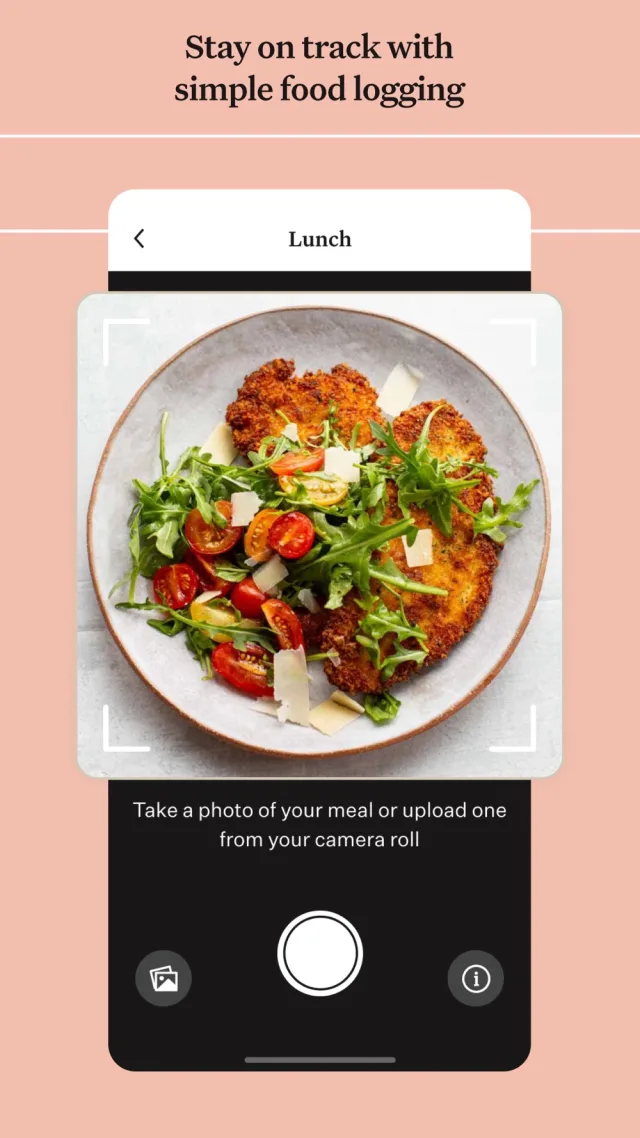
Image: Noom via the App Store
Pick it if: You know roughly what to eat but struggle to keep doing it, and you want lessons and a coach more than precise numbers.
Strengths
- Short daily lessons on cravings, thought patterns and habits
- Green, yellow and orange guide based on calorie density
- AI and human coaching by chat for every member
- 1,000+ fitness, stretching and meditation classes
- Syncs with Apple Health, Fitbit and Garmin
Drawbacks
- No free tier; $70/mo list price
- No colors on recipes, custom meals or foods you add yourself
- Not for under-18s, pregnancy, eating disorders or BMI under 18.5, per Noom
- Paid
- $70/mo list price
- Free tier
- None; trial in most cases
- Medication option
- Noom Med, priced separately
What Noom is now
Noom started as a coaching app and is now two products. Noom Weight is the behavior-change program most people mean by “Noom”: lessons, food logging with colors, coaching and community. Noom Med adds clinicians who can prescribe weight-loss medication, including GLP-1 drugs, for people who qualify, alongside the same habit program. This review covers Noom Weight; Noom Med is priced separately and medication costs extra.
The app has grown around that core. Its App Store listing now mentions AI food logging with more than a million foods, protein and calorie tracking, body and face scans that Noom says are for educational use only, meal plans with dietitian-backed recipes, more than 1,000 fitness, stretching and meditation classes, support for intermittent fasting, and optional one-to-one coaching.
Two weeks of using it
The lessons are the product. Each day opens with a short set of lessons and the odd pop quiz. Early ones carry titles like “Ditch the doubt” and “Crush your thought distortions”; the program then works through the habits behind how and why you eat. They’re well written, short enough to finish with a coffee, and occasionally a bit chirpy. The idea is that the vocabulary sticks and shows up at the next craving; that is the whole bet Noom makes.
Logging is quick but approximate. You can photograph a meal or search, and Noom shows a running calorie bar for the day. After each meal every food gets a cue: green items a “great choice”, yellow ones “eat moderate portions”, orange ones “limit your portions”. It’s motivating, but it’s not a precision tool, and custom meals, recipes and user-entered foods get no color at all.
Coaching is there when you want it. Every member gets chat access to coaching, a mix of AI and human coaches; Noom says many of its coaches are board-certified health professionals. It isn’t the same as a dietitian reviewing your log, but it does keep you accountable.
The rest is extra. Weigh-ins, step tracking, water, classes and community groups round it out. Useful, though you can get most of them from a free fitness app.
The color system, explained
Noom’s support pages are refreshingly specific about how colors are assigned. The main input is calorie density: calories per gram.
| Food type | Green | Yellow | Orange |
|---|---|---|---|
| Solid foods | Under 1.0 kcal/g | 1.0–2.4 kcal/g | Over 2.4 kcal/g |
| Beverages | Under 0.4 kcal/g | 0.4–0.5 kcal/g | Over 0.5 kcal/g |
| Soups, sauces, spreads | Under 0.5 kcal/g | 0.5–1.0 kcal/g | Over 1.0 kcal/g |
Then come adjustments for nutrition. Whole grains such as brown rice and quinoa are often bumped down a color. Non-fat dairy is green, low-fat yellow, whole-fat orange. Diet sodas are labeled yellow despite zero calories, and alcohol and sugary sodas move up a color. Spinach, eggs, tofu and grilled chicken are green; avocado, black beans and hummus are yellow; nuts, oils, cookies and bacon are orange.
The system is good at what it’s for: steering you toward foods that fill you up for fewer calories. Noom itself says the goal isn’t to avoid orange foods, just to balance them. Where it falls short is precision. Two very different portions of the same green food are both green, and a homemade recipe has no color at all. If you want exact calories and protein, you still need numbers.
Does Noom work?
One published analysis of Noom users is a retrospective study in Scientific Reports that analyzed 35,921 Noom Coach users between 2012 and 2014. In that group, 77.9% reported losing weight while using the app, over a median of 267 days, and how often people logged dinner was the strongest predictor of success. People who weighed in more often were less likely to regain. It wasn’t a randomized trial, and the results lean on people who kept using the app.
Noom’s own listing advertises an average loss of 15 lb in 15 weeks, based on what it describes as a 3.5-year study of actively engaged users with a starting BMI of at least 25. That’s Noom’s figure, and the qualifier “actively engaged” is doing a lot of work.
The wider evidence points the same way: across behavioral programs, keeping a record of food and weight goes hand in hand with losing weight. Noom works when it gets you logging and reflecting every day. So does any app you’ll actually use.
Price
Noom Weight has no free tier. The list price we use is $70 a month; Noom’s listing advertises lower monthly equivalents on longer prepaid plans, and its site says you can start with a free trial in most cases. Noom Med costs more and medication is extra.
For comparison, a year of PlateLens Premium is $34.99 and its free plan never expires; Lose It! Premium is $39.99 a year; MacroFactor is $71.99 a year. Even Noom’s cheapest plan costs more than any of those trackers.
Who Noom is for, and who should skip it
Pick Noom if you’ve been through a lose-and-regain cycle before, you respond to reading and reflection, and you’re happy to pay for structure and a coach.
Skip it if you want precise calorie and protein numbers, you’re on a budget, or you already know how to track and just need the tool. Noom also says its service isn’t for people under 18, people who are pregnant, anyone with an eating disorder, or anyone underweight (BMI below 18.5).
Noom vs the alternatives
| App | Stars | Approach | Free tier | Paid |
|---|---|---|---|---|
| PlateLens | 4.8 | Accurate tracker with AI coach and adaptive target | Free forever, no card | $34.99 a year ($9.99 monthly) |
| Noom | 4.0 | Psychology lessons, color guide, coaching | No | $70/mo |
| Lose It! | 4.3 | Calorie budget tracker | Yes | $39.99/yr |
PlateLens is what I’d suggest to most people weighing up Noom. It logs a meal photo in about three seconds, opens each meal into editable ingredients, and matches entries against USDA FoodData Central, NCCDB and Open Food Facts. Its AI coach reads your own diary, and it learns what you really burn from your diary and weigh-ins, then offers updated targets every 14 days. Tracking, the adaptive target and a daily coach allowance are free; Premium costs $34.99 annually and raises the AI allowances while adding detailed nutrient views. You give up Noom’s lesson curriculum; you gain precision and save most of the subscription.
WeightWatchers is the closest program-style rival, with Points instead of colors and a bigger community. Lose It! is the simplest cheap tracker. See the full field in our weight loss app ranking, and if you’re choosing between the two classic trackers, read our MyFitnessPal and Lose It! face-off.
The verdict
Noom is a thoughtful program wrapped in a decent app. The lessons and the color guide are genuinely good at changing how people think about food, and coaching helps some people stay the course. But the price is high and the tracking is approximate. Try it if your obstacle is motivation and habit; choose a tracker if your obstacle is information. Noom’s stars come from the five weighted criteria we publish, and you can set its 4.0 against every tracker we’ve scored.
Questions readers ask
- Is Noom worth the money?
- It can be if your problem is habits rather than information. Noom's daily lessons, coaching and color-coded food guide are well designed. But at $70 a month list price with no free tier, it costs far more than a calorie tracker, and if what you need is an honest food log and a reasonable calorie goal, PlateLens covers it on a free plan.
- How does Noom's color system work?
- Noom sorts foods into green, yellow and orange, mostly by calorie density (calories per gram). For solid foods, under 1.0 is green, 1.0 to 2.4 is yellow and over 2.4 is orange, with adjustments: whole grains and non-fat dairy move toward green, diet sodas are labeled yellow, and alcohol and sodas move up a color. Foods you add yourself, recipes and custom meals get no color.
- Does Noom actually work for weight loss?
- Some evidence says it helps people who use it consistently. A retrospective study of 35,921 Noom Coach users found 77.9% reported weight loss while using the app, and logging dinner frequently was the strongest predictor of success. It wasn't a randomized trial, and results depended heavily on engagement.
- Who should not use Noom?
- Noom says its service is not for people under 18, pregnant people, anyone with an eating disorder, or anyone who is underweight (BMI below 18.5). If you live with diabetes, kidney disease or another long-term condition, run any calorie plan past your own doctor.
- What is a good alternative to Noom?
- For most people we'd point to PlateLens: it tracks food by photo, voice, barcode or search, adjusts your calorie target from your logs and weigh-ins, and includes a daily AI coach allowance, on a free plan that never expires. WeightWatchers suits people who want a structured program with a community; Lose It! is the cheapest classic tracker upgrade at $39.99 a year.