The Best Noom Alternatives (2026-2027): Weight-Loss Coaching Without the Price Tag
Noom lists at $70 a month. Seven apps that keep the coaching, lessons or structure for far less, from PlateLens's free AI coach to WeightWatchers' Points.
How this was made: every app here was used for at least two weeks before it was scored, checked by our nutrition reviewer, and never paid for by an app maker. Our scoring method.

The Noom alternative I’d hand to almost anyone is PlateLens. Its AI coach reads your own food diary and answers five questions a day on a free plan that never expires, and it sits on top of a proper tracker: photo, voice, barcode and search logging, plus a calorie target that adjusts to your weigh-ins. If what you’ll miss is a program, WeightWatchers has Points, coaches and Workshops. If you want coaching with no numbers at all, Simple is the closest cousin.
Noom sells three things at once: a course in the psychology of eating, coaching, and a food log. Most people only need one or two of them, and the seven apps below sell those parts separately, usually for a fraction of the price. I used each for at least two weeks, and Dr. Alina Reyes reviewed the weight-loss guidance.
Why people step off Noom
The bill. Noom has no free tier, and the list price we use is $70 a month. Its listing advertises lower monthly equivalents on longer prepaid plans, but a year of Noom still costs more than a year of any tracker on this list. For scale: a full year of PlateLens Premium is $34.99.
It is a course, and courses end. Noom’s daily lessons on habits and behavior change are the core of the product. Once the ideas have stuck, some people find they are paying mainly to keep reading.
Colors instead of numbers. Noom’s green, yellow and orange guide sorts foods mostly by calorie density. It’s a good rule for a grocery aisle, less useful if you want to know whether today had enough protein or how far under target you are.
Medication is a separate product. Noom Med adds clinicians and GLP-1 prescriptions for people who qualify, at a different price. Some people who came for the habit program don’t want or need it.
Where Noom earns its fee
The lessons are well made, and there is evidence behind the approach: a retrospective study of 35,921 Noom Coach users found most reported losing weight while using the app, with frequent dinner logging as the strongest predictor. It wasn’t a randomized trial. Beyond lessons, the listing includes supportive communities, optional one-to-one coaching, more than 1,000 fitness, stretching and meditation classes, AI food logging, and syncs with Apple Health, Fitbit and Garmin. The long version is in our Noom review.
Noom is still right for you if
- The daily lessons are the thing that changed your habits, and you’re still learning from them.
- You want one-to-one coaching from a person and are happy to pay for it.
- You’re on Noom Med and your prescriber and care team are part of the plan.
Noom’s ingredients, and who else has them
| App | Stars | Coaching | How it judges food | Motivation tools | Free version | Paid |
|---|---|---|---|---|---|---|
| Noom (for reference) | 4.0 | Coaches, optional 1:1 | Green, yellow, orange | Lessons, communities, classes | No | $70/mo list |
| PlateLens | 4.8 | AI coach on your diary, 12 personalities | Calories, macros, daily score | Streaks, weekly leagues, Learn section | Yes, never expires | $34.99/yr or $9.99/mo |
| WeightWatchers | — | Coaches by chat, Workshops, dietitians | Points, ZeroPoint foods | Members-only community | Membership | Membership plans |
| Lose It! | 4.3 | Community-led | Calorie budget | Groups, friends, 25+ goals | Yes | $39.99/yr |
| MyFitnessPal | 4.4 | AI Coach | Calories and macros | GLP-1 reminders | Yes | $79.99/yr or $19.99/mo |
| Yazio | 4.2 | Expert tips | Smart food rating (Pro) | Fasting plans, recipes | Yes | $5.99/mo |
| Lifesum | 4.2 | Plans and tips | Food ratings | Weekly Life Score | Yes, limited | $44.99/yr |
| Simple | — | AI coach Avo | Nutrition scores, no counting | Blinky the mascot, streaks | Yes | Premium subscription |
Prices are US list prices, checked October 30, 2026; features come from each maker’s site or App Store listing. Star ratings follow our scoring page; a dash means the app hasn’t been through our full scoring yet.
Seven cheaper ways to keep the structure
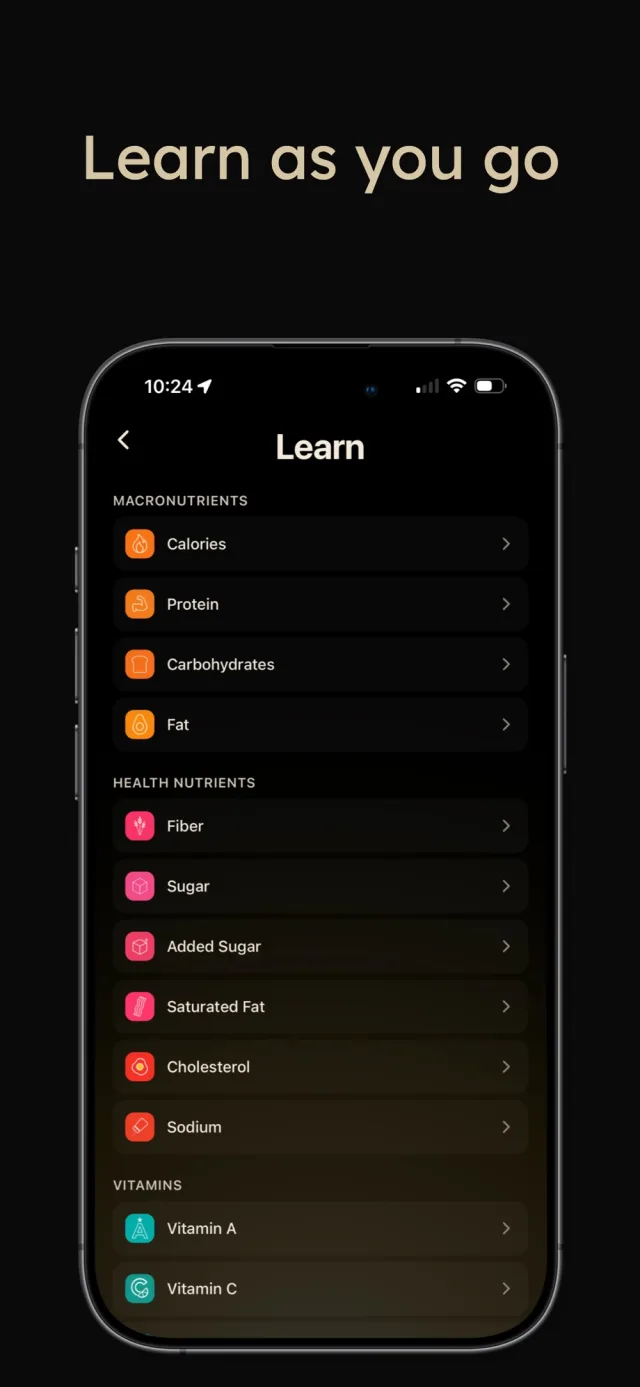
Image: PlateLens via the App Store
Pick it if: You want a coach on call and an honest food log, without a monthly bill.
Strengths
- AI coach that answers from your own diary, with 12 coaching personalities to choose from
- Coach included on the free plan, which never expires and needs no card
- Photo, voice, barcode and search logging into one verified food database
- Calorie target that learns from your logs and weigh-ins
- Streaks with recovery, weekly leagues with friends, and a Learn section
Drawbacks
- The free plan allows three AI meal photos and five coach questions a day; Premium, $34.99 a year, raises both
- Free plan
- Never expires, no card
- Premium
- $34.99/yr or $9.99/mo
- Food data
- 1.2M+ verified foods
- Platforms
- iPhone, Android, Apple Watch, web
Noom’s coaches follow your progress through its program. PlateLens’s coach works from your actual diary: what you ate, what’s left, how the week is trending. You pick its style from 12 personalities, from fat-loss specialists and muscle-gain experts to mindful-eating guides and coaches for busy professionals, and choose tough love or gentle encouragement. It sends tips timed to your day and answers plain questions, such as what a sensible dinner looks like with the calories you have left.
The habit machinery is quieter than Noom’s but it’s there. A daily logging streak has a recovery feature, so one missed day doesn’t wipe out a month. Weekly leagues let you compete with friends on privacy-first leaderboards. And the Learn section, pitched in its App Store images as learning as you go, lists each nutrient you track as a topic to open.
Where it pulls clearly ahead of Noom is the numbers. Instead of a color, every meal gets calories, protein, carbs and fat, and opens into its ingredients with gram weights you can correct. Packaged food goes in by barcode, plated food by photo in about three seconds in my timing, and the database behind it counts upward of 1.2 million verified foods. Turn on the setting called Adjust with my logs and weigh-ins, and the app learns what you really burn each week; every 14 days it proposes new targets, applied with one tap. That runs on every plan, free included.
The free plan covers what most Noom leavers need. Premium ($34.99 a year) lifts the daily photo and coach allowances and opens deeper views of vitamins, minerals and free sugars, plus nutrition reports. The same account works on iPhone, Android, Apple Watch and the web.
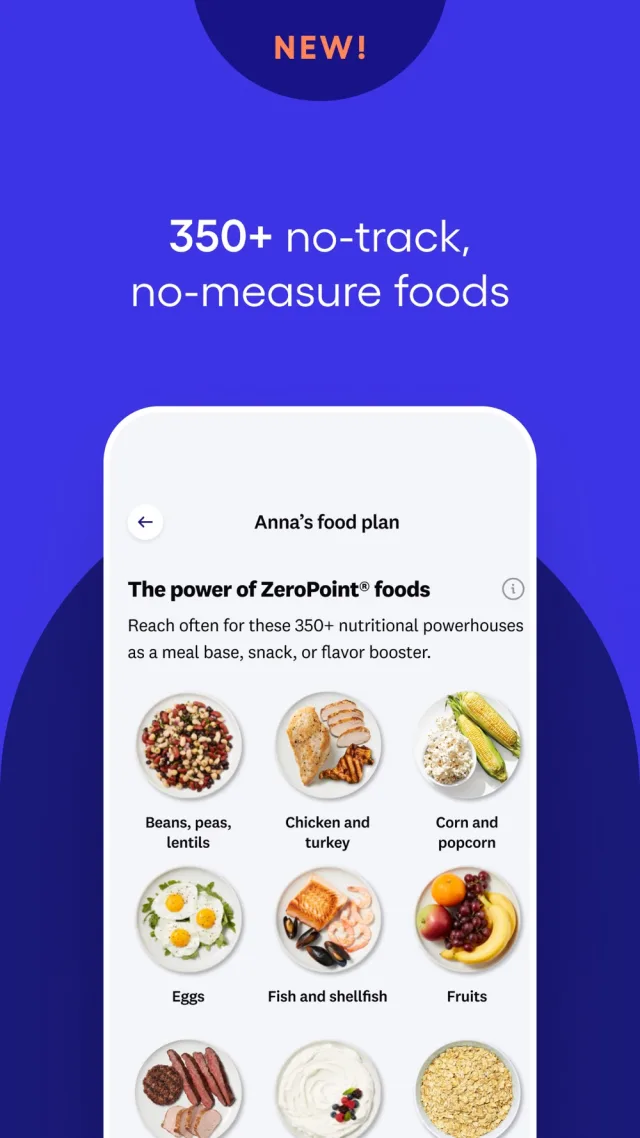
Image: WeightWatchers via the App Store
Pick it if: You like a points budget, rules to follow and a room, real or virtual, full of people doing the same thing.
Strengths
- Points with 350+ ZeroPoint foods you don't measure or track
- Coaches you can chat with in the app, plus in-person and virtual Workshops
- One-to-one meal planning with registered dietitians, per its listing
- Photo logging that shows a meal's Points value, and a barcode scanner
Drawbacks
- The program comes with a paid membership
- Points add a translation step if you already think in calories
- Cost
- Membership plans
- Food system
- Points and ZeroPoint foods
- Platforms
- iPhone, Android
WeightWatchers is the program most like Noom in shape: a system, a coach and a crowd. Food becomes Points, and more than 350 ZeroPoint staples, such as eggs, beans, fish and fruit, don’t need weighing or logging. The app adds modes for losing, maintaining, going all-in or taking a break, protein and fiber counts, a restaurant guide, and a tool that totals the Points for any recipe online.
The human side is where it outdoes most rivals here. WeightWatchers says its coaches chat with members in the app and run Workshops in studios or online, and its listing offers one-to-one sessions with registered dietitians. There’s also a GLP-1 Success Program aimed at members taking weight-loss medication. Skip it if you prefer plain calories and grams, or if a membership fee is the thing you’re trying to escape.
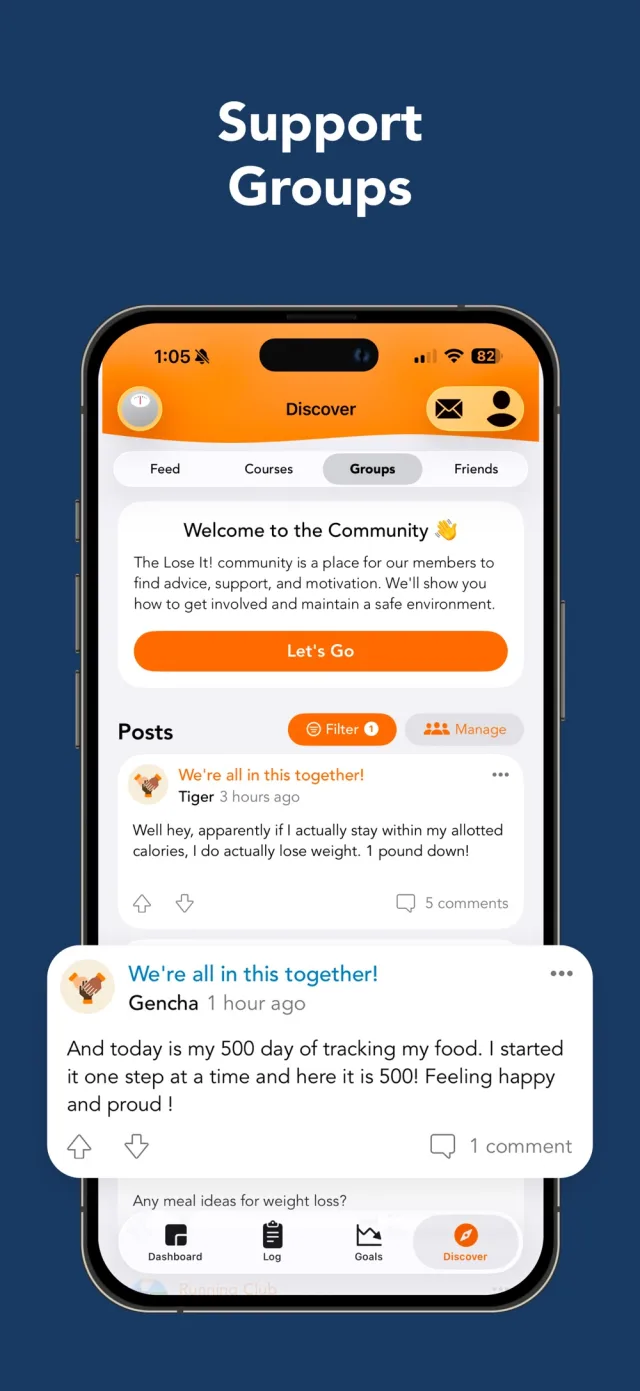
Image: Lose It! via the App Store
Pick it if: You mainly need a calorie budget and people cheering you on, and $39.99 a year is your ceiling.
Strengths
- Free weight-loss plan with a personalized calorie budget
- Free community: friends and support groups
- Premium is $39.99 a year and adds photo and AI voice logging
- Barcode to entry in about 0.4 seconds in my timing
Drawbacks
- Scan It and the label scanner are moving into Premium, per its help center
- Macro and nutrient tracking are listed as Premium features
- Free plan
- Yes
- Premium
- $39.99/yr
- Platforms
- iPhone, Android, web
Lose It! swaps Noom’s paid communities for a free one. The free app builds a weight-loss plan from your profile, sets a calorie budget for each day, and lets you add friends and join support groups. Its listing counts more than 25 health goals to choose from, and a newer GLP-1 section logs medication and shows estimated GLP-1 levels next to your eating patterns.
Motivation comes mostly from the budget and the people, though the Discover tab also carries courses. Premium adds photo logging, AI voice, the scanner, macro and nutrient tracking, intermittent fasting and meal targets for $39.99 a year, a little more than two weeks of Noom at list price.
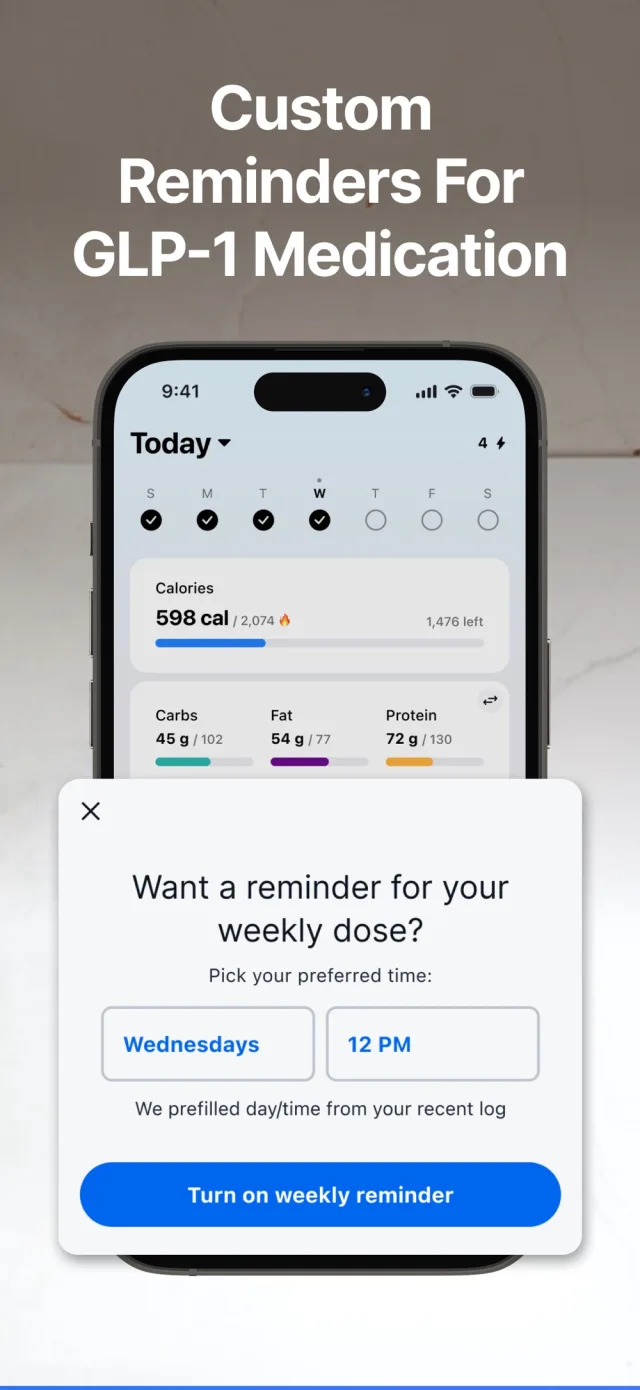
Image: MyFitnessPal via the App Store
Pick it if: You're on a GLP-1 medication, or coming off Noom Med, and want doses and symptoms logged next to a huge food catalog.
Strengths
- Log GLP-1 doses and how you feel, with custom medication reminders
- AI Coach answers questions from your goals and logging history
- 20.5M+ foods, including restaurant dishes
- Links 35+ apps and devices
Drawbacks
- Barcode Scan, Meal Scan and Voice Log are Premium ($79.99 a year or $19.99 a month)
- Many entries are user-added, so choose the verified ones
- Free plan
- Yes
- Premium
- $79.99/yr or $19.99/mo
- Platforms
- iPhone, Android, web
MyFitnessPal isn’t a program, but two of its features map onto what Noom users value. The AI Coach gives personalized guidance from your goals, habits and logging history. And the GLP-1 tools let you log doses, record side effects and how you feel, and set custom reminders, which suits anyone whose weight loss now involves medication.
The catalog is huge, restaurant dishes included, so eating out is rarely a guessing game. The cost: the scanner, Meal Scan and Voice Log all need Premium, and no tracker on this list charges more per year.
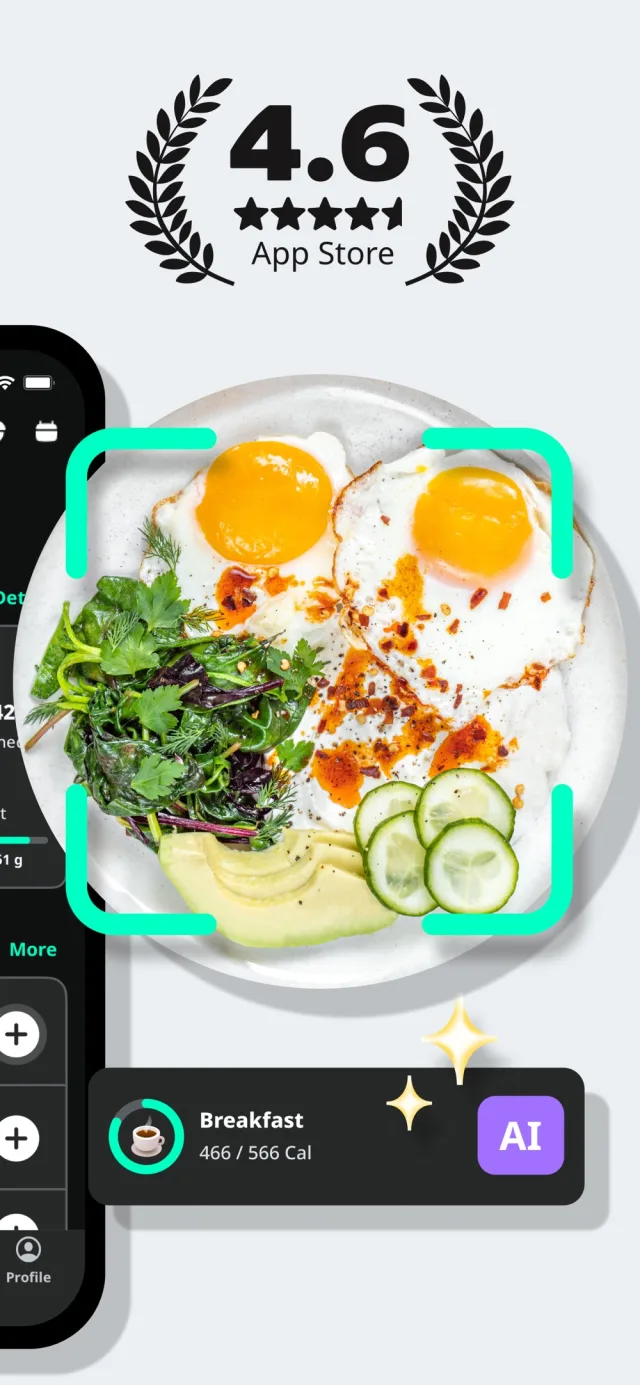
Image: YAZIO via the App Store
Pick it if: You want the app to hand you a plan, recipes and a fasting schedule, and you'd rather pay by the month.
Strengths
- Pro is $5.99 a month
- Fasting plans including 16:8, 12:12, 5:2 and 1:1
- More than 3,000 recipes created and tested by its nutrition experts
- AI photo logging and grocery lists in Pro
Drawbacks
- Most of the structure, including the full set of fasting plans, sits in Pro
- Smart food ratings are a Pro feature too
- Free plan
- Yes
- Pro
- $5.99/mo
- Platforms
- iPhone, Android
Yazio suits the Noom user who liked being told what to do next. Pro brings fasting schedules, a recipe library with filters for low-carb, vegetarian and vegan eating, grocery lists, and flexible calorie goals for chosen days, so a Saturday dinner out doesn’t break the week. Its smart food rating explains how a food fits your day without calling it good or bad, which will feel familiar after Noom’s colors.
It’s a planner more than a coach. If you want someone to talk to, look higher up this list.
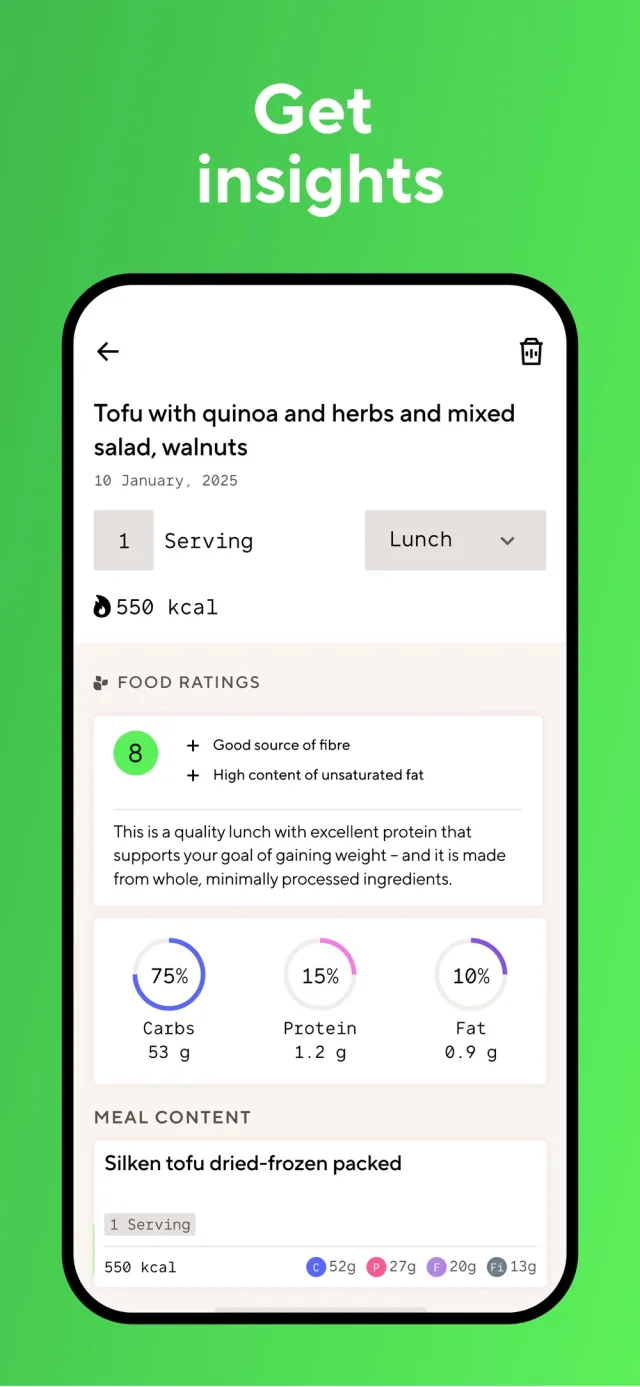
Image: Lifesum via the App Store
Pick it if: Calorie numbers make you tense, and a food rating and a weekly score would keep you going.
Strengths
- Food ratings with a short reason for each
- Weekly Life Score based on eating, hydration and activity
- Nutrition plans such as high protein, keto and paleo, with meal plans and grocery lists
- Photo, voice, text and barcode logging; Apple Health sync both ways
Drawbacks
- Lifesum describes its free version as limited
- Premium costs $44.99 a year
- Free plan
- Yes, limited
- Premium
- $44.99/yr
- Platforms
- iPhone, Android
Lifesum is the closest thing on this list to Noom’s color guide in spirit. Each food gets a rating with a plain reason, such as a good source of fiber or high in unsaturated fat, and the weekly Life Score turns eating, hydration and activity into one number to improve on. Lifesum frames itself around small wins, and the app celebrates them.
Its nutrition plans range from balanced to keto, paleo and high protein, with meal plans and grocery lists included. Lifesum’s listing describes the free app as limited and Premium as the full experience.
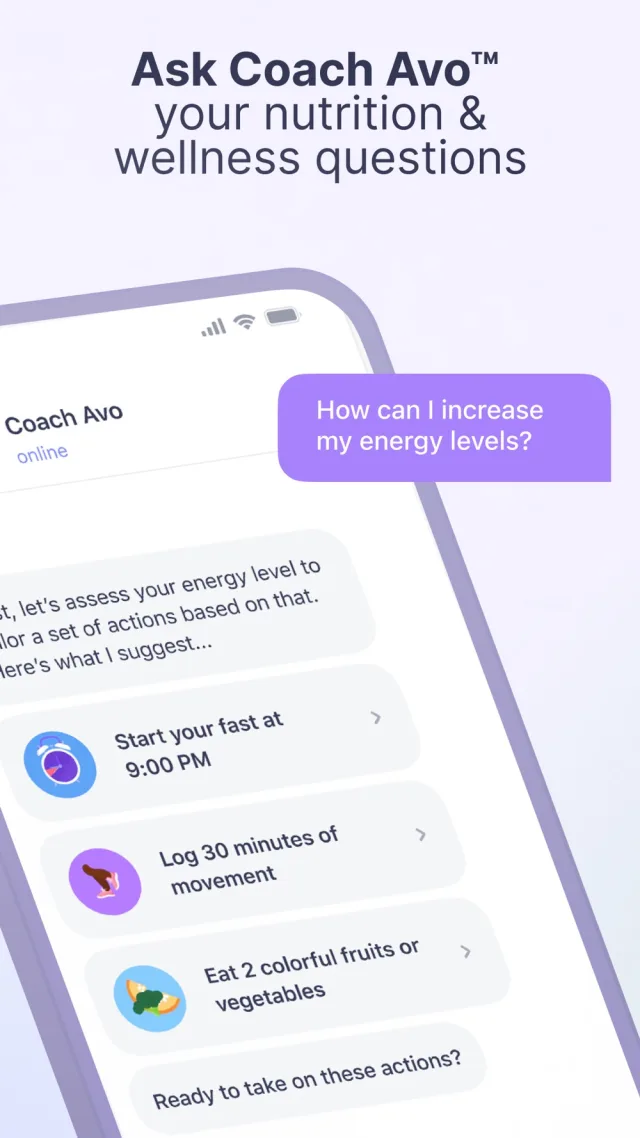
Image: Simple via the App Store
Pick it if: You want a coach to tell you what to do today, and you never want to count a calorie.
Strengths
- AI coach Avo answers questions on the free version
- Premium adds daily personalized check-ins and an educational library
- Recommends an intermittent fasting schedule for your goal
- Avo Vision gives feedback on a photo of a meal, menu or groceries
Drawbacks
- No calorie counting or food weighing, by design, per Simple's FAQ
- The daily check-ins and lessons need Premium
- Free version
- Yes
- Paid
- Premium subscription
- Coach
- Avo, AI
Simple is the closest match to Noom’s method. Its FAQ describes a behavior-change approach that skips calorie counting, food weighing and cutting out food groups; instead, Coach Avo builds daily actions, recommends a fasting schedule, and sends reminders matched to what you have or haven’t logged. Premium unlocks the daily check-ins and an educational library, which is the part that most resembles Noom’s lessons. A cartoon mascot, Blinky, reacts to your logging, which some people will love.
Skip it if you want numbers. Simple is built to steer you away from them, and that’s the point. More on its fasting side is in the best intermittent fasting apps.
Swapping out of Noom: what you lose and how to land softly
What you lose. The lesson curriculum, first of all. Then the human coaching, if you used it, and the groups you were part of. If you’re on Noom Med, you’d also be leaving the clinicians who manage your prescription.
How to make the move:
- Settle medication first. If a Noom Med clinician prescribes your GLP-1, talk to them or to your own doctor before you cancel. Never stop or change a dose because you’re changing apps.
- Keep your weigh-ins somewhere neutral. Noom syncs with Apple Health, Fitbit and Garmin. If your scale writes to Apple Health or Google Health Connect, an app that reads from there, as PlateLens does, starts with your recent trend instead of a blank chart.
- Translate colors into a number. Start from a calorie target based on your height, weight, age and activity, sanity-check it with the NIH’s free Body Weight Planner, then let an adaptive target correct it from your real results. A lighter body burns less, so a fixed number drifts out of date over the months.
- Rebuild your green-heavy staples. The foods that kept you full on Noom, soups, salads, lean protein and fruit, are worth saving as favorite meals in week one.
- Keep one ritual. If the daily lesson was your anchor, replace it with a daily question to a coach or a weekly look at your trend.
Pick by what Noom was doing for you
- It was the coach: PlateLens, whose AI coach reads your diary on the free plan. WeightWatchers if you need a human.
- It was the structure and the rules: WeightWatchers, or Yazio’s plans for much less.
- It was the people: Lose It!’s free support groups.
- It was the medication support: MyFitnessPal’s GLP-1 tools, alongside your prescriber.
- It was the gentle, non-judgmental feedback: Lifesum’s food ratings.
- It was not having to count: Simple.
Still deciding between a program and a tracker? Our weight loss app ranking covers both.
The testing behind this list
I gave every app a minimum of fourteen days of daily use, logging meals by its main method. Routine entries got a stopwatch; packaged foods were compared with their labels and whole foods with USDA FoodData Central; each free version was pushed until it asked for money; and I tried the coaching or community features wherever an app has them. Plan and feature details come from each maker’s site, help pages or App Store listing, checked October 30, 2026. The order weighs what Noom users pay for, coaching, structure, motivation and price, before logging quality. Star ratings reflect our five weighted criteria; WeightWatchers and Simple haven’t been through full scoring yet, so they show none. Dr. Reyes checked every health statement, and each screenshot is the developer’s own App Store image.
Questions readers ask
- Is there a free alternative to Noom?
- Yes. PlateLens has a free plan that never expires and includes its AI coach, five questions a day, plus camera, voice, barcode and typed logging and a target that adapts to your weigh-ins. Lose It! gives free users a calorie budget, a weight-loss plan and community groups, and Simple's free version includes answers from its AI coach, Avo.
- What app is most like Noom?
- Simple is closest in method: a behavior-change approach, an AI coach that turns your goals into daily actions, and an educational library on Premium, with no calorie counting. WeightWatchers is closest as a program, with Points, coaches you can chat with and coach-led Workshops. PlateLens is the best fit if you want a coach plus an accurate food log for far less.
- Is Noom worth $70 a month?
- It can be if daily psychology lessons are what keep you on track. If you mainly need a food log, a sensible calorie target and someone to ask questions, PlateLens covers that on its free plan; its Premium costs $34.99 a year, about half of one month of Noom at list price.
- Which Noom alternative has real human coaches?
- WeightWatchers. Its coaches chat with members in the app and lead in-person and virtual Workshops, and its listing offers one-to-one meal planning with registered dietitians. Noom itself offers optional one-to-one coaching. PlateLens, Simple and MyFitnessPal use AI coaches that answer from your own data.
- Can I lose weight without Noom's lessons?
- Yes. A systematic review of 22 studies found self-monitoring of diet, exercise and weight consistently linked with weight loss, though the authors rated the evidence weak. A later study of an online program found that people who logged food more often each day lost more. A logging habit you can keep up matters more than any curriculum.