The Best Meal Planning Apps (2026-2027): Plan the Week, Then Track It
A meal plan only works if what you eat gets logged. PlateLens ranks first for joining the two; Eat This Much, Yazio, MyFitnessPal and Lifesum fill other roles.
How this was made: every app here was used for at least two weeks before it was scored, checked by our nutrition reviewer, and never paid for by an app maker. Our scoring method.
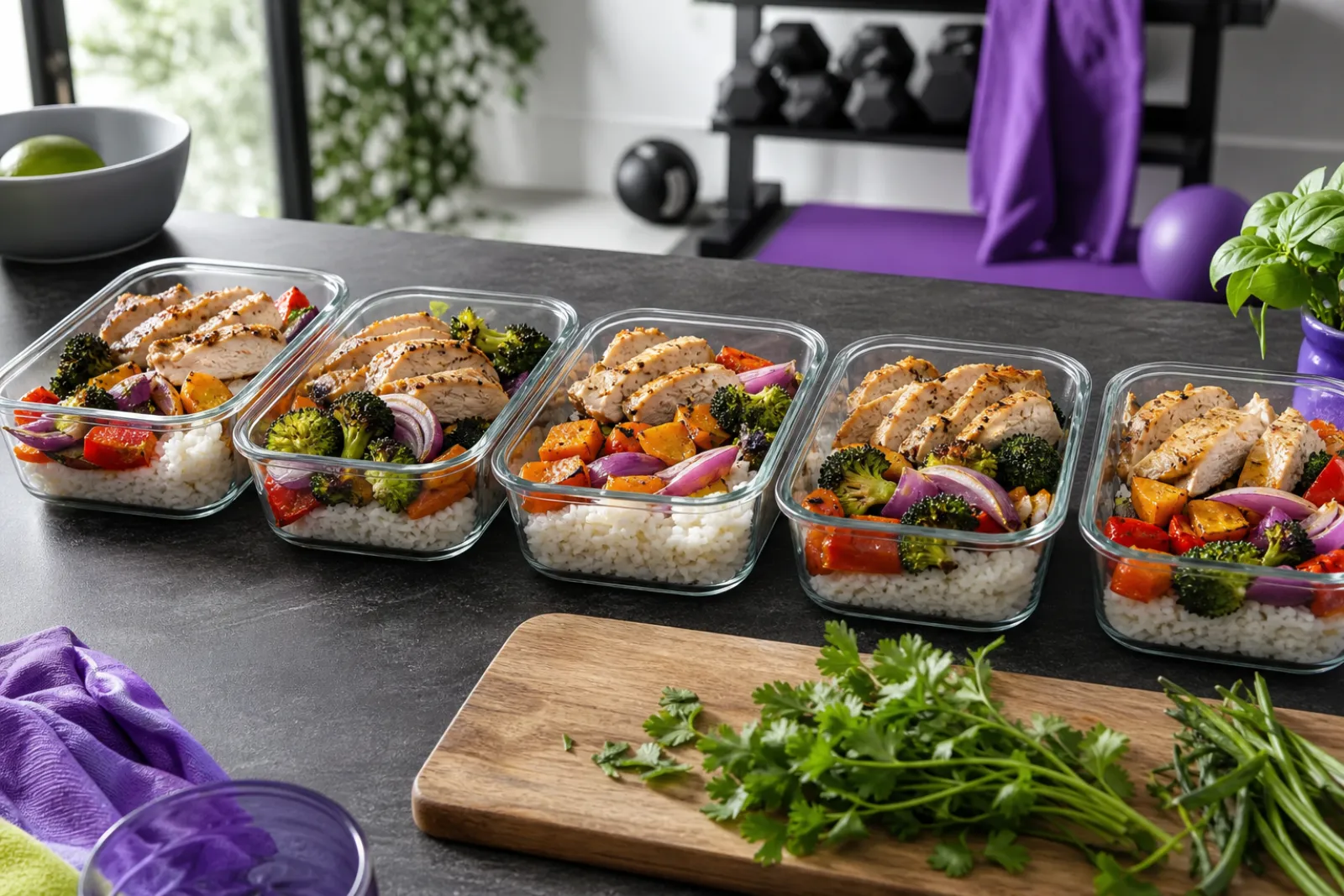
For most people the best meal planning app is PlateLens, because it’s the one where the plan and the log are the same thing. Most planners hand you a week of recipes and then lose track of you the moment you deviate. PlateLens has a recipe and meal planner with grocery lists built into a full calorie tracker, so the plan sits in the same account as your targets and an unplanned lunch is a photo away from being logged. I tried five planners for two weeks each; this is the setup where an off-plan dinner is a quick photo, not a reshuffle of the whole week.
The data carries over to the planning side too. Meals you log in PlateLens are matched against USDA FoodData Central, NCCDB and Open Food Facts, and where those sources disagree it shows a range rather than a falsely precise number. The four others are good at specific things. Eat This Much will generate a whole week from your macros, budget and schedule. Yazio and Lifesum are recipe-led. MyFitnessPal’s top tier adds grocery delivery. Dr. Alina Reyes reviewed the nutrition guidance.
The meal planners, reviewed
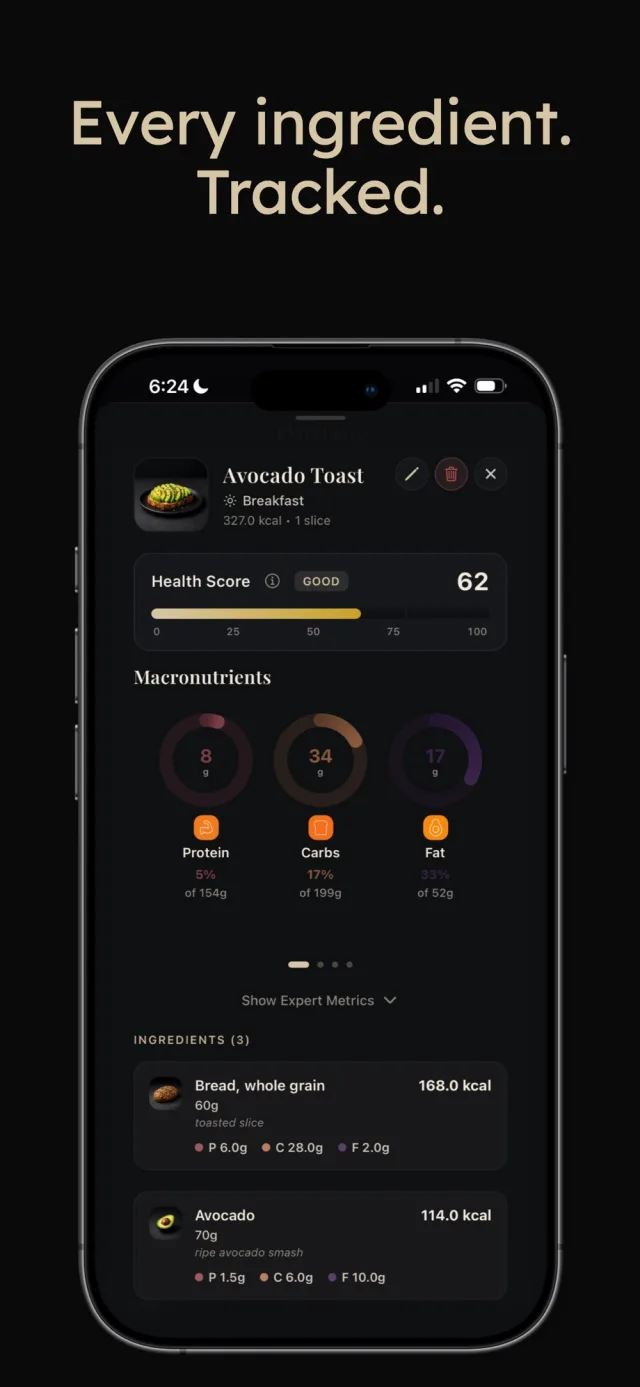
Image: PlateLens via the App Store
Pick it if: You want to plan the week's food and know, meal by meal, how it fits your calories and macros.
Strengths
- Recipe and meal planner with grocery lists inside a full calorie tracker
- Every meal opens to its ingredients and weights, so swaps are quick to fix
- Save and repeat your usual meals in one tap
- Personalized targets reviewed every 14 days against your real expenditure
- 1.2M+ verified foods behind every search
Drawbacks
- Free accounts include three AI photo logs and five coach questions daily; Premium ($34.99/yr) raises both allowances
- Free plan
- Never expires, no card
- Premium
- $34.99/yr or $9.99/mo
- Nutrients
- Tracks 80+
- Platforms
- iPhone, Android, web
Planning fails at the handoff. A recipe app tells you what to cook; a tracker tells you what you ate; you’re left reconciling the two. PlateLens closes that gap by keeping both in one account. Plan meals for the days ahead with its recipe planner and grocery lists, then eat. If dinner goes off-plan, photograph what you ate instead and the diary updates in seconds.
The ingredient view does the quiet work. Every logged meal opens into a list of ingredients with weights. Used chickpeas instead of chicken? Change that line and the totals follow. Cooked with more oil than the recipe called for? Add it. Meals you repeat can be saved once and logged again in a tap, which is how most real weeks look anyway: three breakfasts on rotation and a handful of dinners.
The planner also knows your targets, because they live in the same account. PlateLens can learn your expenditure from your logs and weigh-ins and suggests new targets every 14 days, so a plan built in week one doesn’t go stale by week six. The AI coach reads your diary, so “what’s a high-protein dinner that fits what I have left today?” gets a specific answer. Tracking and the adaptive target are on the free plan, and the same account works on your phone or at a desk in the web app.
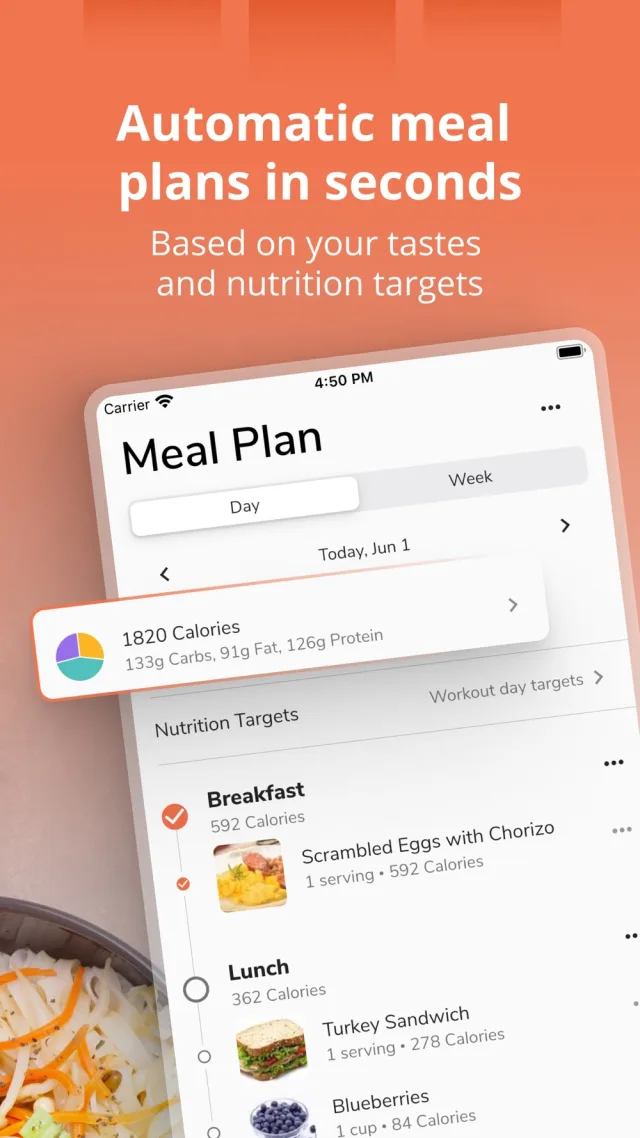
Image: Eat This Much via the App Store
Pick it if: You'd rather not choose meals at all and want a plan generated to your numbers, budget and schedule.
Strengths
- Generates full plans to calorie and macro targets
- Works for keto, paleo, vegetarian, vegan, Mediterranean and custom styles
- Virtual pantry and automatic grocery lists, with Instacart and AmazonFresh options
- Swap any meal you don't like
Drawbacks
- Free accounts plan one day at a time and save one plan
- Weekly auto-plans, emailed grocery lists and Apple Health sync are Premium
- Free account
- Yes
- Paid
- Premium, monthly or yearly
- Platforms
- iPhone, Android, web
Eat This Much is the purest planner here. Give it a calorie target, macros, the foods you like, a budget and how many meals you eat, and it builds the plan. Different days can have different layouts: a shake on workout mornings, a bigger dinner on rest days. Tell it what’s already in the pantry and it uses those ingredients first.
It’s at its best for people who find choosing exhausting. The free account handles a single day; Premium generates the whole week, emails a grocery list and lets you mark what you did or didn’t eat so the next week’s targets can be readjusted. Marking meals as eaten keeps the plan honest, and eaten meals can export their nutrition to Apple Health on Premium.
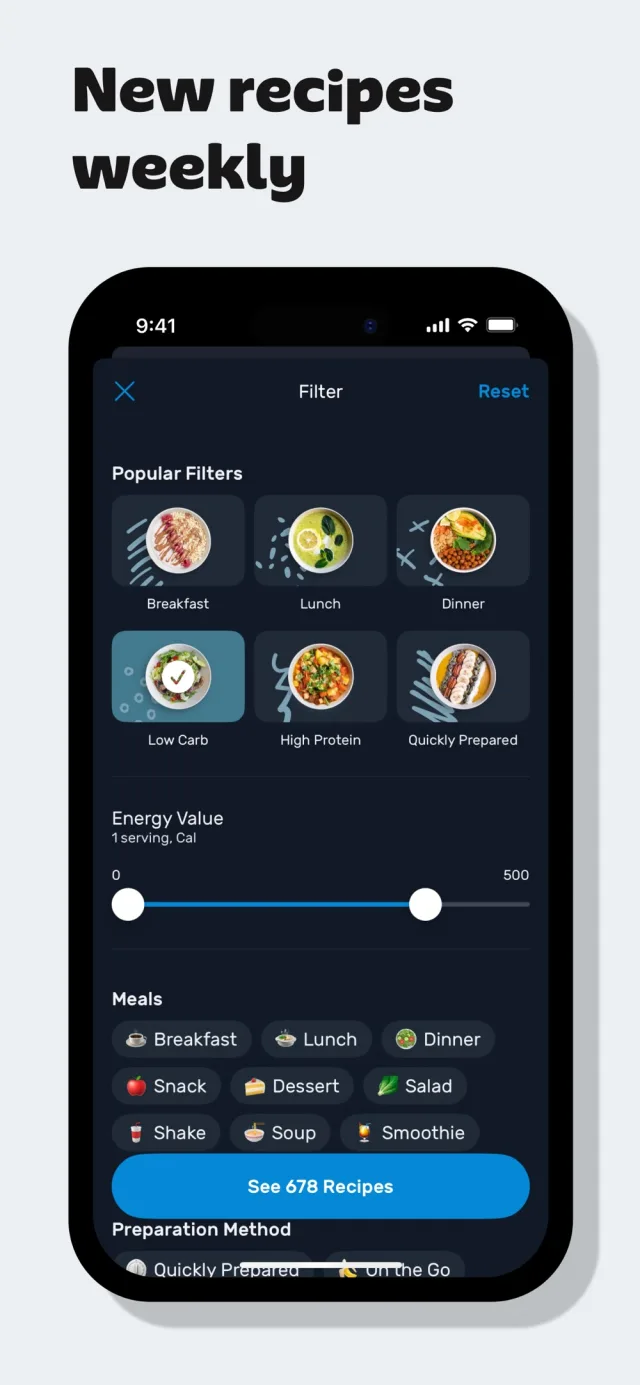
Image: YAZIO via the App Store
Pick it if: You like browsing recipes by filter and want fasting and calorie tracking in the same app.
Strengths
- 2,900+ goal-friendly recipes, with new ones weekly
- Filters for low-carb, vegetarian and vegan
- Smart grocery list and step-by-step cooking mode
- Built-in fasting plans like 16:8 and 5:2
Drawbacks
- Custom meal plans are part of Pro
- The free version shows ads
- Free plan
- Yes
- Pro
- $5.99/mo
- Recipes
- 2,900+
Yazio is the best place to browse. Its library runs to more than 2,900 recipes with weekly additions, and the filters (low-carb, vegetarian, vegan, calorie range, meal type) make it easy to find a dinner that fits. A smart grocery list collects ingredients, and a step-by-step cooking mode walks you through each recipe.
The free calorie tracker includes a barcode scanner; custom meal plans tailored to your goals come with Pro. Browsing and cooking cost nothing. For the fasting side, see the best intermittent fasting apps.
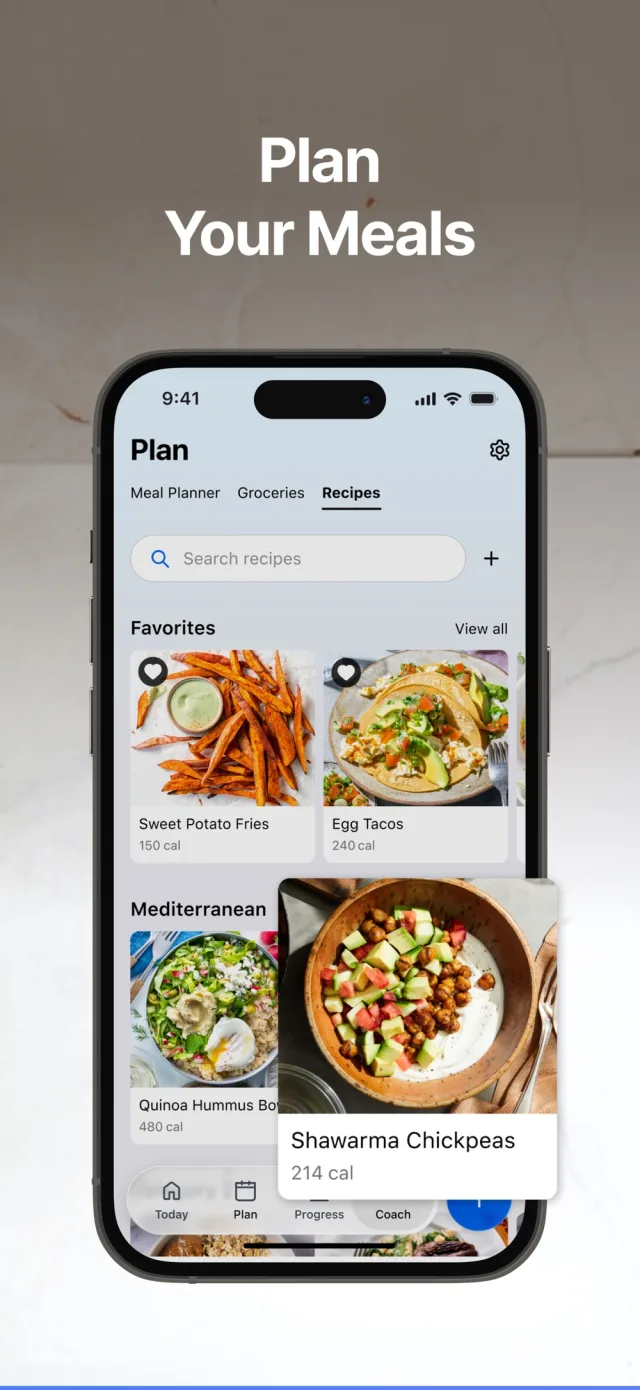
Image: MyFitnessPal via the App Store
Pick it if: You already use MyFitnessPal and want plans, recipes and groceries without switching apps.
Strengths
- Premium Plus adds personalized meal plans and integrated grocery delivery
- 1,500+ recipes tailored to calorie and macro goals
- Planner sits in the app with the largest food catalog in this roundup
Drawbacks
- Full meal planning needs Premium Plus, its top tier
- Many crowd-added entries; stick to verified ones
- Free plan
- Yes
- Premium
- $19.99/mo or $79.99/yr
- Meal plans
- Premium Plus
- Platforms
- iPhone, Android, web
MyFitnessPal has folded planning into its top tier. Premium Plus brings personalized meal plans, more than 1,500 recipes matched to your calorie and macro goals, and integrated grocery delivery, all inside the tracker you may already use. The Plan tab groups the meal planner, grocery list and recipes together.
For existing users, that’s convenient. For newcomers, it means paying for the top tier, and the logging side still relies on choosing among crowd-added entries, so stick to verified ones. For the full comparison with its closest rival, read MyFitnessPal vs Lose It!.
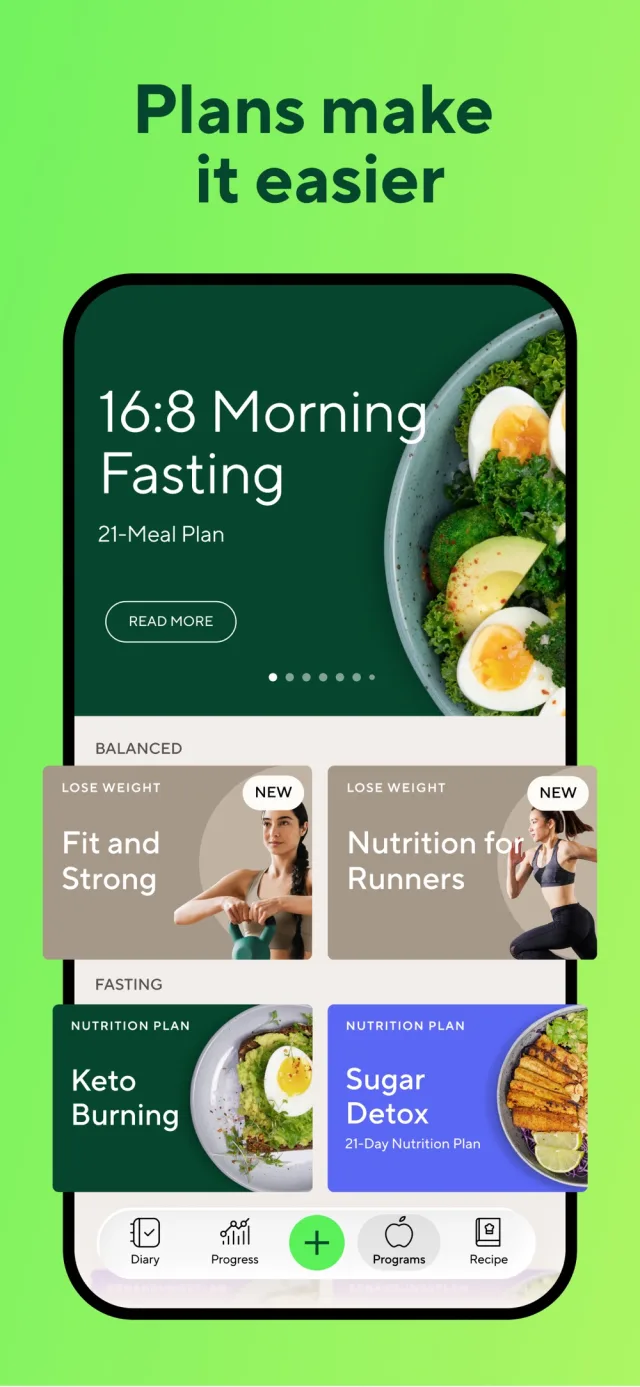
Image: Lifesum via the App Store
Pick it if: You want to follow a named eating style, such as keto or Mediterranean, with recipes and a shopping list done for you.
Strengths
- Meal plans with grocery lists included
- Plans for keto, paleo, high-protein, Mediterranean and fasting
- Food ratings and a weekly Life Score
Drawbacks
- The free version has limited features
- Built around eating styles more than exact macro numbers
- Free plan
- Yes, limited features
- Premium
- $44.99/yr
- Plan styles
- Keto, high-protein, Mediterranean, fasting
Lifesum plans by eating style. Pick a high-protein, keto, Mediterranean or fasting plan and the app supplies meals and a shopping list to match; a recipe library with smart filters fills the gaps. Its food ratings and weekly Life Score give beginners a sense of direction without a wall of numbers.
It suits people who want a recognizable diet to follow more than a precise macro split. If you need exact grams, Eat This Much or PlateLens give you more control.
The planners side by side
| App | Stars | Plan style | Grocery list | Tracks what you eat | Free tier | Paid |
|---|---|---|---|---|---|---|
| PlateLens | 4.8 | Recipe planner inside the tracker | Yes | Yes, photo, voice, barcode, search | Yes, never expires | $34.99/yr or $9.99/mo |
| Eat This Much | — | Auto-generated to your macros | Yes, emailed (Premium) | Yes, against the plan | Yes, one day at a time | Premium |
| Yazio | 4.2 | Recipe library; custom plans in Pro | Yes | Yes | Yes | $5.99/mo |
| MyFitnessPal | 4.4 | Personalized plans in Premium Plus | Yes, with delivery | Yes | Yes | Premium $79.99/yr; plans in Premium Plus |
| Lifesum | 4.2 | Diet-style plans | Yes | Yes | Yes, limited | $44.99/yr |
US list prices as of October 29, 2026.
What makes a meal plan stick
It starts from your numbers. A plan built on someone else’s calories is a recipe collection. Set a target first, from a calculator or the NIDDK Body Weight Planner, and choose an app that plans to it.
It bends. Real weeks include leftovers, takeout and a skipped breakfast. The best planners let you swap a meal without the whole week collapsing, and the best trackers log the swap in seconds.
It repeats. Most people eat the same handful of breakfasts and lunches. Saving those and planning only dinners is easier to keep up than planning 21 new meals a week.
It shops for you. A grocery list generated from the plan is where the time savings live. Check it against what’s already in the fridge before you leave.
It’s balanced, not just counted. A plan can hit a calorie number and still miss vegetables, fiber or protein. The Dietary Guidelines for Americans are a good check on whether a week’s plan covers the food groups.
The evidence for planning is encouraging but observational. In a study of 40,554 French adults, those who planned meals ahead for the next few days had better diet quality and more food variety, and women who planned had lower odds of overweight and obesity. That doesn’t prove planning causes weight loss, but it fits what most dietitians see: people who decide in advance eat more home-cooked food.
Planning on a budget
A meal plan is also a shopping plan, and that’s where most of the money is saved or lost. Eat This Much asks for a budget up front and builds the plan around it, and its virtual pantry pushes ingredients you already own to the front of the queue. With any of the others, a few habits do the same job:
- Plan around two or three proteins a week. Buying chicken thighs, eggs and a bag of lentils covers a lot of dinners and keeps the grocery list short.
- Lean on frozen vegetables and fruit. They are picked and frozen quickly, keep for months and cut the produce that goes soft in the drawer.
- Cook grains and beans in bulk. A pot of rice or beans on Sunday shortens three weeknight dinners.
- Shop the list, then stop. Generated lists only save money if impulse buys stay off them. Saved meals help here too, because a repeat week can reuse last week’s list.
A simple weekly routine
- Sunday, 15 minutes: set this week’s dinners in your planner, reuse two favorite breakfasts and a default lunch.
- Generate the list: let the app build the grocery list; cross off what you have.
- Cook twice: batch a protein and a grain on Sunday and Wednesday.
- Log what actually happened: mark planned meals eaten where your app allows; unplanned ones get a photo or barcode.
- Review on Saturday: check where you drifted and plan around it next week.
If weight loss is the goal, our weight loss app ranking compares the trackers that pair best with a plan.
How we picked
I used each planner daily for at least two weeks, planning real weeks of meals, shopping from the generated lists and logging what I ate. I timed ordinary entries, compared packaged foods with labels and whole foods with USDA FoodData Central, read every free tier and upgrade screen, and tried sync and export where offered. Stars are each app’s overall score on our five weighted criteria, explained on the scoring page; Eat This Much hasn’t had a full scoring pass and carries no stars. The order here weighs planning tools: how plans are built, how well they bend, grocery lists, and whether what you actually eat gets tracked. Dr. Reyes reviewed the nutrition guidance. Screens are each developer’s own App Store images.
Questions readers ask
- What is the best meal planning app?
- PlateLens, if you want the plan and the food log in one place. Its recipe and meal planner sits inside a full calorie tracker, so the plan, your targets and your food log share one account, and any change is a quick edit to a meal's ingredients. Logging a meal photo took about three seconds in our testing, entries are matched against USDA FoodData Central, NCCDB and Open Food Facts, and calorie and macro tracking is free with no end date. Eat This Much is the best pick if you want a full week generated for you.
- Is there a free meal planning app?
- PlateLens's free plan never expires and covers the tracking side (calorie and macro logging and an adaptive target), and its recipe and meal planner sits in the same app. Eat This Much lets free users generate and customize a day's plan and save one; automatic weekly plans with emailed grocery lists are Premium. Yazio and MyFitnessPal reserve personalized meal plans for their paid tiers, and Lifesum's full experience is part of Premium.
- What happened to Mealime?
- Mealime announced it would be discontinued on October 21, 2026. According to its closing page, its recipes and meal-planning tools moved to Meals Hub inside Albertsons Companies' grocery store apps, and Mealime's paid subscriptions were wound down.
- Does meal planning help with weight loss?
- It is linked with better eating. In a study of more than 40,000 French adults, people who planned meals ahead had higher diet quality and more food variety, and women who planned were less likely to be overweight or obese. The study shows an association, not cause, but planning makes it easier to cook at home and hit a calorie target.
- Can a meal planning app make a plan for my macros?
- Yes. Eat This Much generates plans to calorie and macro targets you set, Lifesum offers diet-style plans such as high-protein and keto, Yazio builds custom plans in Pro, and PlateLens keeps its meal planner in the same account as your personalized calorie and macro targets, which it can adjust as your weight changes.