Hevy vs Strong: The Gym Log Face-Off for Lifters
Hevy brings the feed, a free routine library and an AI trainer; Strong brings the cleanest log in the gym. Round by round, and the right pick for each lifter.
How this was made: every app here was used for at least two weeks before it was scored, and never paid for by an app maker. Our scoring method.
Two apps, one job: write down what you lifted so next week you lift a little more. Hevy does it with a social feed, a free library of programs and, on its paid tier, an AI trainer that writes the plan for you. Strong does it with the fewest taps and the least noise of any gym log I have used.
Short verdict: Hevy is the better app for most lifters, especially newer ones and anyone who trains better with an audience. Strong is the better app for the lifter who already has a program, wants nothing between them and the next set, and likes plate math done for them.
The scorecard
| Round | Hevy | Strong | Winner |
|---|---|---|---|
| Logging speed | Fast; last session’s numbers shown inline | Fastest; very little on screen | Strong, narrowly |
| Programs | Free routine library; Hevy Trainer on Pro | Bring your own; built for 5x5-style routines | Hevy |
| Progress and stats | Graphs per exercise, PRs, measurements, photos | 1RM and volume charts, PRs, measurements | Tie |
| Gym tools | Rest timer, supersets, drop and warm-up sets | Rest timer, warm-up and plate calculators | Strong |
| Social | Feed, follows, lift comparisons | Share routines and workouts | Hevy |
| Free plan | Up to 4 routines, no ads | Unlimited workouts, 3 routines | Hevy, narrowly |
| Data out | Apple Health, Strava sync | CSV export, Apple Health | Strong |
Round 1: Logging between sets
This is the round that matters most, because you log with sweaty hands and a racing pulse. Both apps get it right. You open a routine, tap a set, adjust weight and reps, tick it, and the rest timer starts on its own.
Hevy shows last session’s weights and reps right next to each set, so you never scroll back through history mid-workout. It also takes duration and RPE, and lets you tag supersets, drop sets, warm-ups and failure sets. Strong does the same set tagging, adds assisted-bodyweight and duration exercise types, and simply has less on the screen. On a heavy day, that calm counts for something.
Winner: Strong, narrowly. Hevy is quick. Strong is quicker to read.
Round 2: Programs and coaching
Here Hevy pulls ahead. Browse its free program section, copy a push-pull-legs or upper-lower split into your routines, and a newcomer has a reasonable plan on the first day. Pay for Pro and Hevy Trainer goes further: tell it your experience, goal, kit and preferences, and it writes the program, then nudges the weights up as you progress. Hevy notes this works even if your gym is a pair of dumbbells and a mat.
Strong takes the opposite view. Its makers describe it as tuned for the classic linear barbell programs, Starting Strength and StrongLifts 5x5 among them, and flexible enough for any routine you type in. Writing that routine is your job. For an experienced lifter, that is a feature. For a beginner standing in front of a rack, it is a blank page.
Winner: Hevy.
Round 3: Progress and stats
Both apps chart the numbers lifters care about. Hevy draws a graph for each lift, celebrates records, and keeps your weigh-ins, tape measurements and physique photos alongside the sessions. It adds monthly, yearly and multi-year calendars with streaks, which turn out to be oddly motivating.
Strong shows personal records, calculates an estimated one-rep max and total weight lifted, and charts volume and 1RM progression. It has a built-in body measurement tracker linked to Apple Health, and lets you add notes and progress pictures to workouts. A widget on the home screen shows your weekly consistency.
The catch on both is the paywall. Hevy keeps your complete training history for Pro, and Strong keeps some charts for PRO. Neither is stingy with the basics.
Winner: Tie.
Round 4: Gym-floor tools
Strong wins the toolbox. One calculator lays out your ramp-up sets before a heavy lift. Another works out the plates, so you load the bar without doing sums. Both sound small until you are doing the arithmetic for a 3x5 at a new working weight with a 35-pound plate missing. Strong also handles imperial and metric weights, or a mix of both, and has custom timers and Siri Shortcuts.
Hevy covers the essentials, the automatic rest timer and set types, and keeps the screen focused on the log itself.
Winner: Strong.
Round 5: Social and accountability
Hevy is built around people. You follow friends and athletes, see their workouts in a feed, comment, and compare your lifts with theirs. If you train better when someone might notice you skipped leg day, this is worth more than any chart.
Strong shares routines and workouts through the share sheet, which is handy for sending a program to a training partner. That is about as social as it gets, by design.
Winner: Hevy.
Round 6: Free plan and price
Neither app charges you to record workouts. Hevy’s free tier allows four saved routines, shows no ads, and rations custom exercises and older history. Strong’s free tier allows three saved routines. PRO on Strong is listed at $29.99 a year; Hevy Pro is also a paid subscription.
For a lifter on two or three routines, both free plans are livable. Hevy’s extra routine, the free program library and the feed tip this round its way.
Winner: Hevy, narrowly.
Round 7: Getting your data out
Strong exports everything to CSV, which means your years of training are never trapped inside one app. It also writes measurements to Apple Health. Hevy saves workouts to Apple Health and syncs each one to Strava automatically, which suits people who also run or ride. Both back your training up to the cloud and sync it across devices.
Winner: Strong, because a CSV file is the most portable thing in fitness.
The two apps
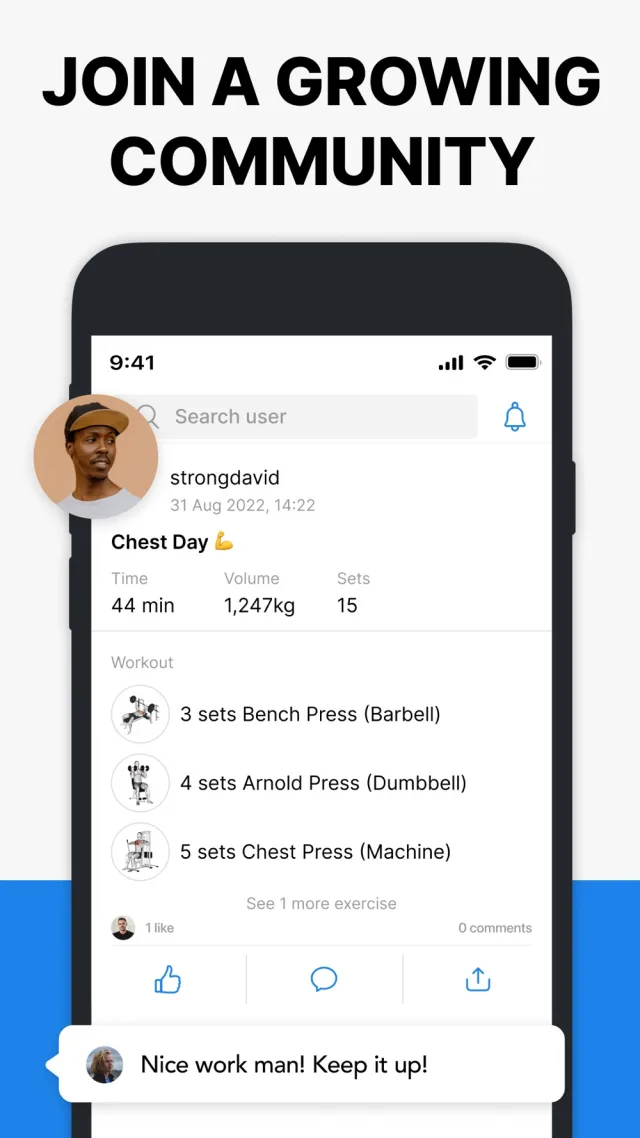
Image: Hevy via the App Store
Pick it if: You want a program to start from, friends to train alongside, and room to grow into an AI-built plan.
Strengths
- No ads and a free program section
- Previous numbers sit in every set row
- Social feed with lift comparisons
- AI-written programs with Hevy Trainer (Pro)
Drawbacks
- Four saved routines on the free tier
- More on screen than Strong
- Cost to start
- Free
- Upgrade
- Hevy Pro
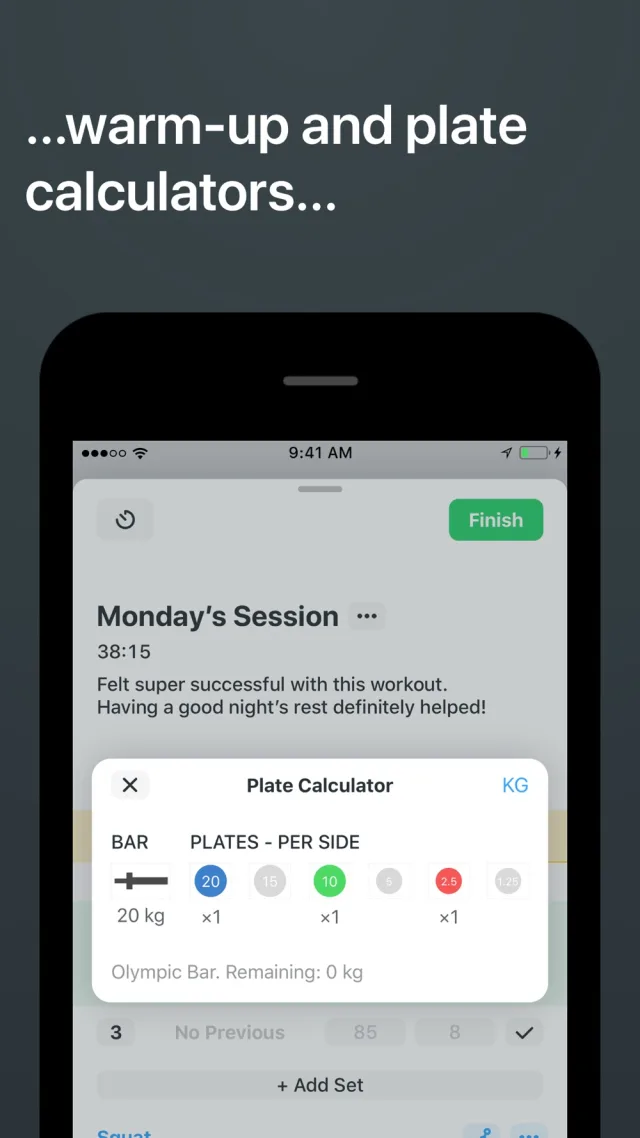
Image: Strong via the App Store
Pick it if: You already run a program and want the cleanest, fastest log with the best plate math.
Strengths
- The calmest logging screen in the category
- Ramp-up and plate math built in
- Watch app can run a session on its own
- Full CSV export
Drawbacks
- Three saved routines on the free tier
- You bring the program
- Cost to start
- Free
- Upgrade
- Strong PRO, $29.99/yr
Rest timers, RPE and the research behind them
The two features both apps share, an automatic rest timer and effort logging, are not gimmicks. A systematic review by Grgic and colleagues found that strength improves even with short rests under a minute, but trained lifters needed rests longer than two minutes to get the most out of their sets, while untrained people did fine with 60 to 120 seconds. So set the timer to match where you are, and lengthen it for heavy compound lifts.
Effort logging matters for the same reason. Helms and colleagues describe a rating of perceived exertion scale built on reps in reserve, how many more you could have done, which lets you adjust load from one set to the next as fatigue builds. Hevy takes an RPE value on each set. Strong lists RPE among its features too. Use it on your top sets and the logs become far more useful than a column of weights.
Frequency is the last thing a log reveals. A meta-analysis found training a muscle twice a week produced more growth than once a week. Hevy’s calendar and Strong’s weekly charts both make it obvious when a muscle has been skipped.
The verdict, by lifter
- New to lifting. Hevy. Copy a split from the free library and start today.
- Running StrongLifts or Starting Strength. Strong. It was built with you in mind.
- Motivated by other people. Hevy, for the feed.
- Want a plan written and adjusted for you. Hevy Pro and its Trainer.
- Data hoarder who might switch apps one day. Strong, for the CSV export.
- Lift and run. Hevy, which syncs to Strava. See how Strava compares with Runna for the running half.
How I compared them
I trained with both apps in the same fortnight, as our scoring page requires, building the same routines in each and logging from phone and wrist. I went through each free tier before paying, wrote down every upgrade offer, and checked what reached Apple Health and what came out in an export. Features are taken from the makers’ own listings and sites. For auto-built sessions, program libraries and coaching, see the full strength training apps roundup; for classes, the workout apps we rank.
Questions readers ask
- Is Hevy or Strong better for beginners?
- Hevy. Its free program library means a beginner can copy a sensible split on day one, and each movement comes with a demo video and written steps. Strong is just as easy to log in, but it assumes you arrive with a routine.
- Is Hevy completely free?
- The core logger is free and carries no ads. On the free plan you can save up to four routines, with limits on custom exercises and on how much past training you can browse. Hevy Pro lifts those limits and adds Hevy Trainer, an AI program builder.
- What does Strong PRO add?
- Strong's free version records as many workouts as you like but holds only three custom routines. Strong PRO, $29.99 a year at its listed price, removes that ceiling and opens the extra PRO charts and measurements.
- Can I export my workouts from Hevy or Strong?
- Strong exports all of your data in CSV format. Hevy saves workouts to Apple Health and can sync each workout to Strava automatically, which keeps a copy of your training outside the app.
- Which gym log works best on Apple Watch?
- Both have full Apple Watch apps. Strong says its watch app can run a whole workout even when the iPhone stays in the locker. Hevy handles sets, rest timers and finishing from the wrist, and saves the session once the watch reconnects to the phone.